

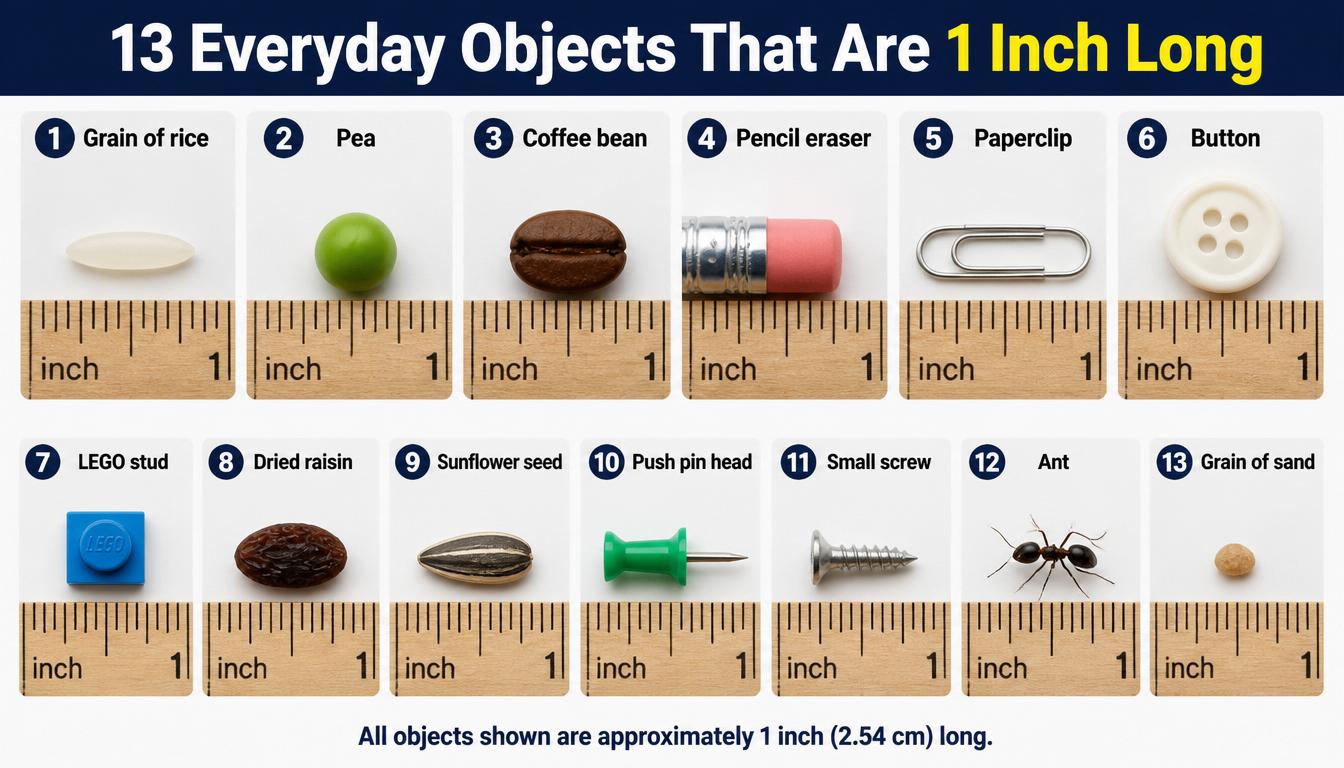
Have you ever been halfway through a DIY project, standing in the garage with a piece of wood in one hand and absolutely no ruler in sight, wondering, “Wait what does 1 inch look like again?” It happens more often than people admit. One moment you’re confident, the next you’re holding up random household items like some kind of detective trying to solve the mystery of size.
The funny thing about 1 Inch Long Objects is that they’re everywhere. We touch them, carry them, stack them, lose them under couches, and occasionally step on them barefoot (which is never a pleasant experiance). Yet most people struggle to visualize an inch without reaching for a measuring tape.
An inch is one of the most commonly used units in the Imperial Measurement System, equal to 1/12th of a foot, 2.54 centimeters, or 25.4 millimeters. While many countries rely heavily on the Metric System, the inch remains deeply woven into everyday life, especially in the United States.
Understanding What Does 1 Inch Look Like isn’t just useful for school assignments. It helps with Measurement Estimation, home repairs, crafting, shopping online, woodworking projects, and even teaching children basic Measurement Literacy.
In this guide, we’ll explore thirteen surprisingly familiar objects that can help you visualize one inch. Some are almost exactly one inch long. Others are close enough to serve as a handy Visual Measurement Reference when you don’t have measuring tools nearby.
| Everyday Object | Approx. 1-Inch Dimension | Quick Reference |
|---|---|---|
| U.S. Quarter | Diameter ≈ 0.955 in | Common coin for size comparison |
| Adult Thumb | Width ≈ 1 in | Easy body-based measurement |
| Push Pin (Thumbtack) | Length ≈ 1 in | Standard office supply |
| LEGO Brick | Height ≈ 1 in (stacked reference) | Precise toy measurement |
| Six-Sided Die | Height ≈ 1 in | Common gaming cube |
| Sugar Cube | Height ≈ 1 in | Uniform manufactured size |
| Keyboard Key | Width ≈ 1 in | Standard key size |
| Bottle Cap | Diameter ≈ 1 in | Everyday household item |
| Small Paper Clip | Length ≈ 1 in | Unbent measurement |
| Guitar Pick | Length ≈ 1 in | Common musical accessory |
| USB Type-A Connector | Length ≈ 1 in | Familiar tech reference |
| Postage Stamp | Width ≈ 1 in | Mailing standard |
| LEGO Plate Stack | Combined Height ≈ 1 in | Demonstrates LEGO precision |
Why Learning 1 Inch References Matters
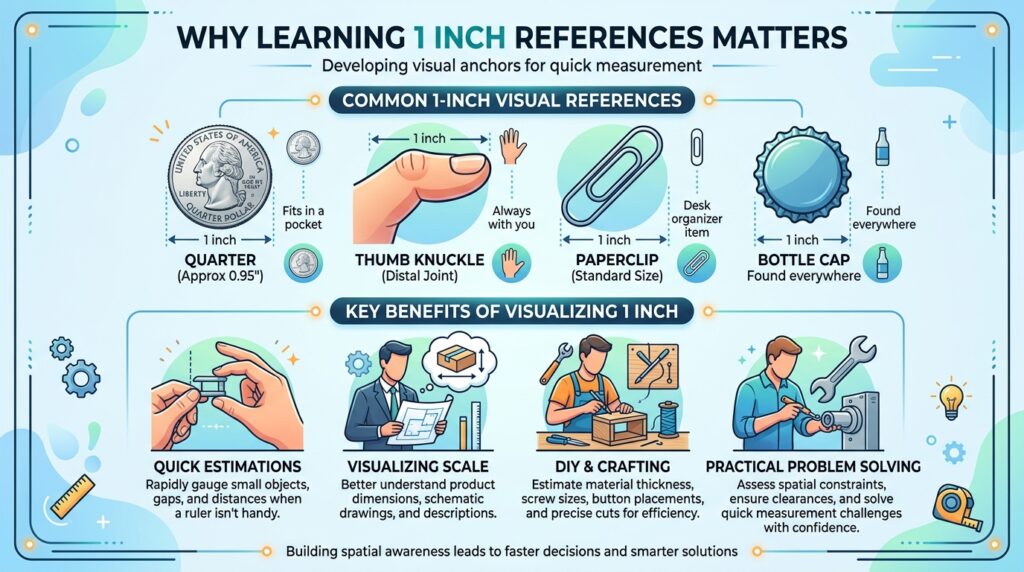
There’s a quiet kind of confidence that comes from knowing measurements without constantly checking a ruler.
Teachers often use One Inch Reference Objects to improve Spatial Reasoning and encourage Hands-On Learning. Builders use visual estimates before making exact measurements. Crafters rely on instinct developed through years of working with dimensions.
In manufacturing environments, however, visual estimation only gets you so far. Industries focused on Precision Manufacturing, Mechanical Tolerance Control, and Dimensional Accuracy often measure down to fractions of a millimeter. A tiny mistake can become a very expensive mistake.
Yet for everyday situations, knowing a few 1 Inch Examples can save time and make sizing decisions much easier.
1. U.S. Quarter
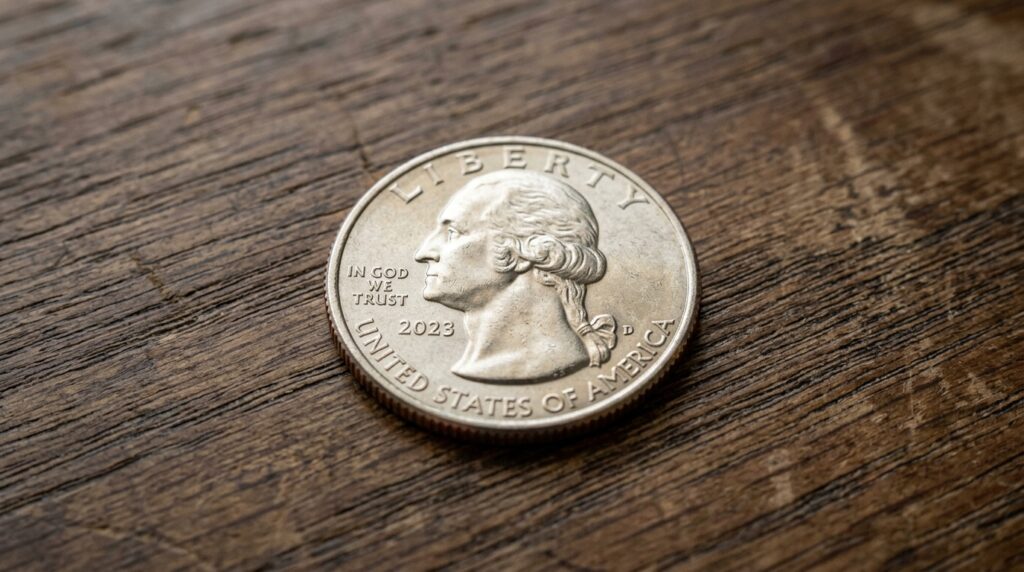
One of the most useful Everyday Objects That Are 1 Inch Long is the U.S. Quarter.
Produced by the U.S. Mint, a quarter measures approximately 0.955 inches in diameter. That’s close enough that many people use it as a quick visual estimate.
If you place a quarter on a table and imagine just a tiny bit more width, you’re looking at roughly one inch.
The quarter has become such a common sizing reference that even people who’ve never intentionally studied measurements often use it subconsciously. Kinda neat when you think about it.
Why It Works
- Easy to find
- Consistent dimensions
- Excellent for Measurement Without a Ruler
- Common throughout the United States
2. Adult Thumb Width
Human bodies are surprisingly useful measuring tools.
The average Adult Thumb is roughly one inch wide at the knuckle area. This isn’t exact, of course. Human dimensions vary from person to person due to natural Anthropometric Measurement differences.
Still, for quick estimation, your thumb can be incredibly practical.
Long before rulers became widespread, people used body-based measurements extensively. The practice dates back thousands of years, including periods during the Roman Empire when body references often influenced measurement standards.
Why It Works
- Always available
- Useful in outdoor situations
- Supports Human Scale Measurement
- Enhances natural Measurement Skills
3. Push Pin
A standard Push Pin often measures close to one inch from tip to top.
Teachers, office workers, and students have probably handled thousands of them without realizing they’re excellent size references.
It’s one of those objects that quietly lives in drawers for years until suddenly becoming important during a school project.
Practical Uses
- Classroom demonstrations
- Teaching Measurement
- Bulletin board planning
- Quick visual comparison
4. Thumbtack
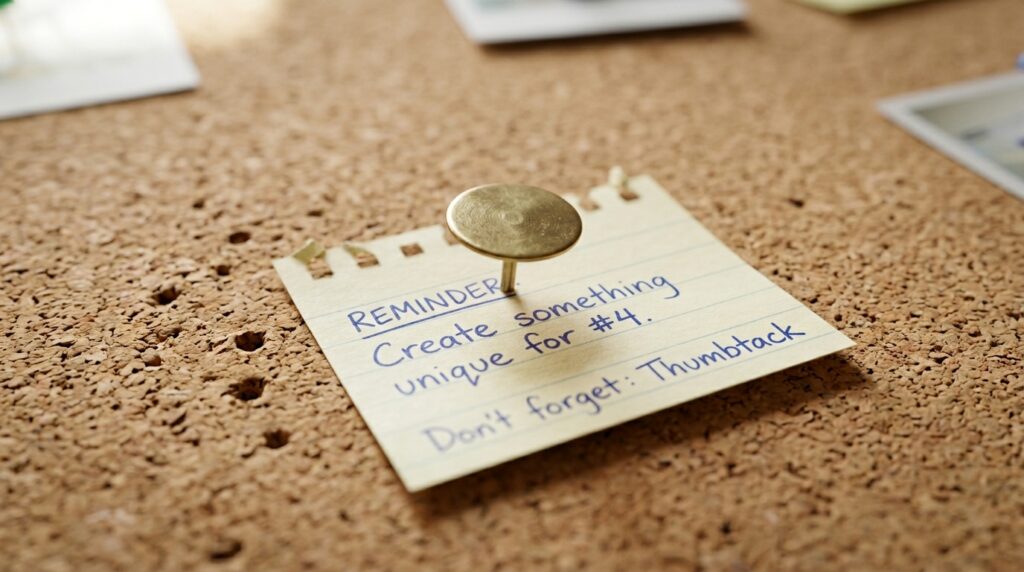
Closely related to the push pin, the Thumbtack typically measures around one inch in total length.
Interestingly, the thumbtack has roots connected to Edwin Moore, who is credited with developing the modern push-pin concept in the early twentieth century.
A small invention, sure. But one that ended up on millions of office walls worldwide.
Why It’s Useful
- Common household item
- Easy to visualize
- Great for Measurement Estimation
5. Small LEGO Brick
Few toys have achieved the global recognition of LEGO.
Manufactured by the LEGO Group in Norway, LEGO bricks follow highly precise dimensional standards. Their consistency is one reason they fit together so perfectly generation after generation.
A small LEGO Brick can provide a surprisingly useful sizing reference. Several brick dimensions are close to one inch when viewed across specific lengths.
There’s something oddly satisfying about using children’s toys for practical measurement purposes.
Educational Benefits
- Encourages Visual Learning
- Supports Classroom Learning
- Demonstrates Standardized Dimensions
- Promotes Practical Learning
6. LEGO Plate Stack
Stack multiple LEGO plates together and you’ll approach the height of one inch.
This example highlights an important principle of Dimensional Consistency. LEGO pieces are engineered with extraordinary precision so that every component aligns perfectly.
Such precision reflects concepts found in Industrial Standards and Automated Manufacturing.
Kids see toys.
Engineers see tiny masterpieces of dimensional control.
Both are correct.
7. Six-Sided Die
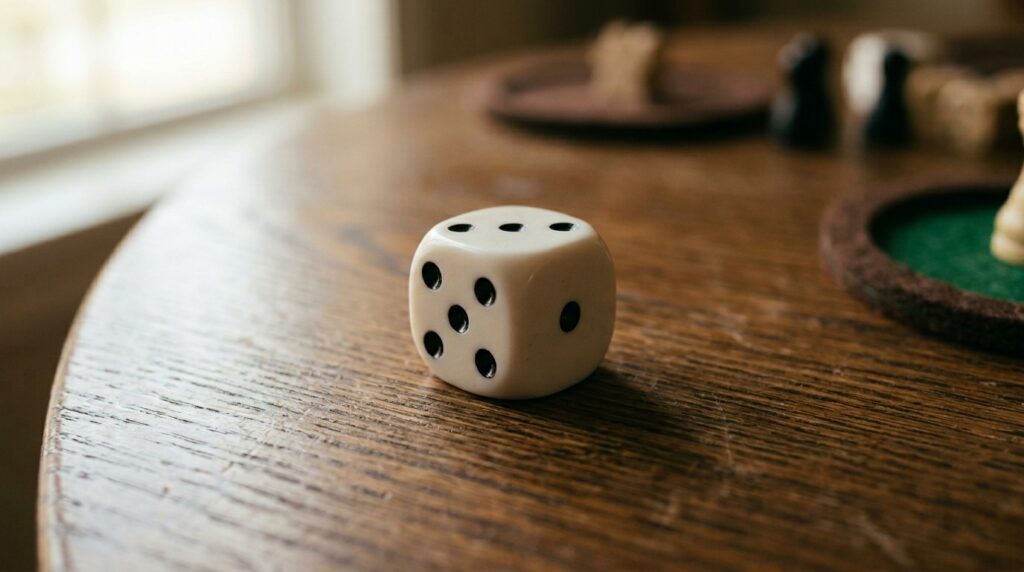
A standard Six-Sided Die used in many board games often measures close to one inch on each side.
Whether you’re playing family games or role-playing adventures, dice offer convenient measurement references sitting right in front of you.
And honestly, rolling a die to estimate measurements sounds much more entertaining than digging through a toolbox.
Why It’s Helpful
- Common household item
- Uniform dimensions
- Useful Size Comparison tool
8. Sugar Cube
A traditional Sugar Cube is another classic One Inch Object.
Though exact dimensions vary between manufacturers, many sugar cubes come remarkably close to one inch in width.
For teachers introducing measurement concepts, sugar cubes create a memorable visual example. Plus, students tend to pay more attention when snacks are involved. Funny how that works.
Educational Applications
- Measurement Activities
- Visual demonstrations
- Early math lessons
- Learning Length Units
9. Keyboard Key
Certain larger keyboard keys found on desktop keyboards approach one inch in length.
While key sizes vary across manufacturers, they provide useful references when discussing dimensions and scale.
Computers have become such a normal part of daily life that we rarely stop to notice the measurements built into their design.
Why It Matters
- Familiar object
- Supports Visual Size Reference
- Useful in tech-oriented environments
10. USB Type-A Connector
The metal portion of a USB Type-A Connector measures close to one inch in overall length.
This makes it one of the more modern examples of Common Household Objects that can help estimate size.
Technology evolves rapidly, but dimensions often remain standardized to maintain compatibility. That’s one of the hidden strengths of standardization.
Organizations such as the International Electrotechnical Commission help establish standards that support consistency across countless products and industries.
11. Bottle Cap

Many bottle caps measure around one inch in diameter.
They’re small enough to fit comfortably between your fingers and common enough that nearly everyone has one nearby at some point during the day.
If someone asks you, “How long is 1 inch?”, a bottle cap can provide a surprisingly effective answer.
Benefits
- Easy visual estimate
- Widely available
- Practical everyday reference
12. Postage Stamp
A standard Postage Stamp can serve as another excellent One Inch Reference Object.
The United States Postal Service has issued stamps in various sizes over the years, but many traditional designs fall close to one inch in one dimension.
Before smartphones and instant messaging took over, stamps connected families across vast distances.
A tiny square carrying huge emotions.
That’s actually kinda beautiful.
13. Guitar Pick
Many standard Guitar Picks measure approximately one inch from top to bottom.
Musicians carry them everywhere. Some collect them. Others seem to lose them faster than socks disappear in a dryer.
As measurement references, however, they’re surprisingly handy.
Why Musicians Appreciate Them
- Portable
- Consistent sizing
- Useful visual guide
- Easy comparison tool
Other Common Objects Close to One Inch
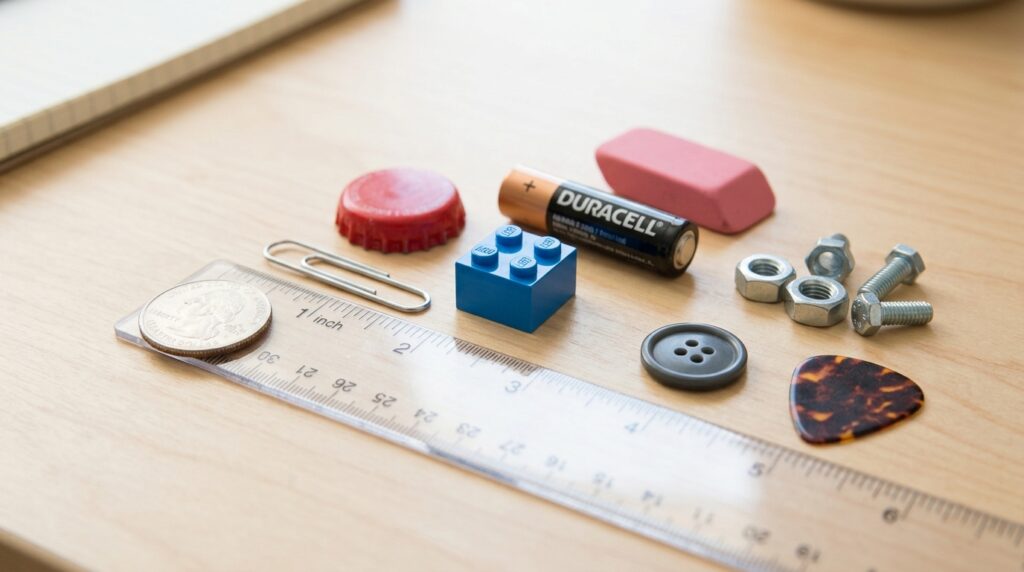
Several additional items can help with Estimating One Inch:
- AAA battery diameter
- Small paper clips
- Jewelry charms
- Certain watch components
- Craft beads
- Small hardware washers
Not every object is exactly one inch long, but many fall close enough for practical estimation purposes.
How People Estimated Measurements Before Modern Tools
Long before digital calipers and laser measuring devices existed, people relied heavily on observation and body-based references.
During periods surrounding World War I and World War II, soldiers, builders, and field engineers frequently developed strong visual estimation skills. Measuring tools weren’t always available, especially in rapidly changing environments.
Even earlier civilizations, including those of the Roman Empire, used body dimensions as practical references for trade, architecture, and construction.
One historian famously noted that measurement systems often began not with mathematics but with necessity.
And honestly, necessity remains a pretty effective teacher.
Teaching Kids What One Inch Looks Like
Parents and teachers often ask how to explain measurements in a way children can actually understand.
The answer usually involves real objects.
Instead of abstract numbers, children learn faster when they can touch, compare, stack, and observe physical examples.
Try activities such as:
- Comparing objects around the house
- Building inch towers with blocks
- Measuring classroom supplies
- Creating visual reference boards
- Estimating lengths before measuring
These methods strengthen Measurement Literacy, Spatial Reasoning Activities, and overall confidence with numbers.
The Psychology Behind Measurement Estimation
Human brains are fascinatingly inconsistent.
Most people can recognize faces instantly yet struggle to estimate distances accurately. This disconnect plays a major role in the Psychology of Measurement.
Repeated exposure creates familiarity. The more often you compare objects to a known size reference, the stronger your internal measuring system becomes.
This process contributes to User Muscle Memory, intuitive judgment, and practical decision-making.
It’s not magic.
It’s experience quietly teaching the brain.
DIY Projects and Home Improvement Uses

For DIY enthusiasts, understanding Household Measurement Reference objects can be incredibly useful.
Whether you’re planning shelves, cutting trim, organizing storage bins, or working on Woodworking Measurements, quick estimation speeds up the planning process.
Common applications include:
- DIY Projects
- Home Improvement Measurements
- Scrapbooking layouts
- Furniture planning
- Crafting dimensions
- Project sizing reference checks
Of course, exact cuts still require proper measuring tools. Estimation helps you get close; precision helps you get it right.
Frequently Asked Question
how long is 1 inch
A 1 inch measurement equals 2.54 centimeters or 25.4 millimeters. It is roughly the width of an adult thumb and is commonly used in the Imperial Measurement System for everyday measurements.
household items that are 1/2 inch
Many common household items are about 1/2 inch in size, including a standard shirt button, a small marble, a pencil eraser’s diameter, or the width of some bottle caps. These objects can serve as quick visual references when you need to estimate half an inch without a ruler.
Conclusion
Knowing What Does One Inch Look Like may seem like a small skill, but it’s surprisingly practical. From the U.S. Quarter and Adult Thumb to a USB Type-A Connector, Sugar Cube, Bottle Cap, and Guitar Pick, the world is filled with useful Everyday Objects That Are 1 Inch Long or very close to it.
These simple references strengthen Measurement Estimation, improve Practical Measurement Skills, support Educational Measurement Tools, and help with everything from classroom activities to home improvement projects.
The next time someone asks for Examples of One Inch in Real Life, you won’t need to scramble for a ruler. You’ll already have a dozen familiar objects ready to serve as instant visual guides.
And that’s the funny thing about measurements. Once you start noticing them, they’re everywhere. Sitting on your desk. Hiding in your kitchen drawer. Rolling across a game board. Waiting quietly to remind you exactly what one inch looks like.