

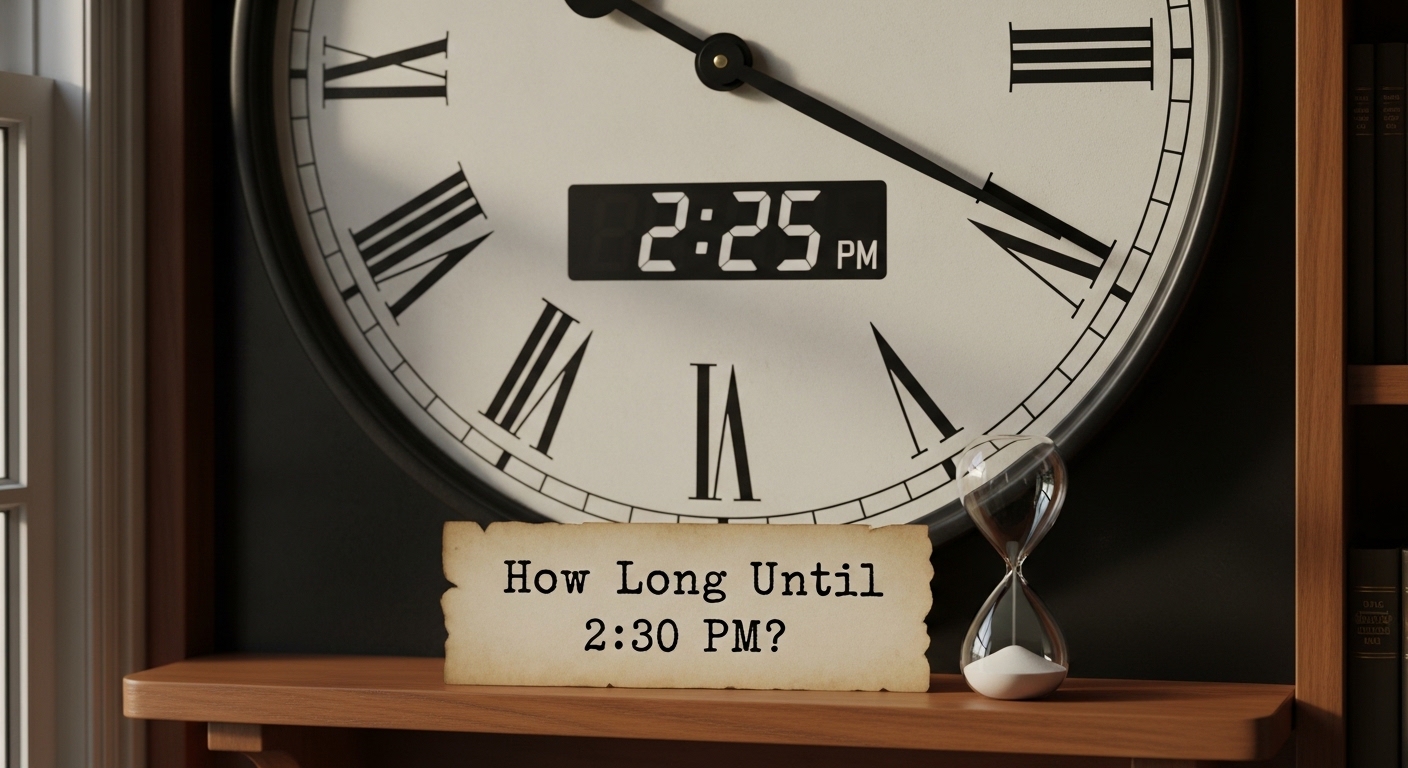
There are days when time feels like it’s stretching itself out on purpose, like it’s playing a lil game with us, almost teasing. You look at the clock and think, how long until 2:30 PM actually arrives?
And suddenly, every second becomes a loud little visitor in your head, knocking again and again. It’s strange how a simple moment in the day can turn into a full emotional landscape, like waiting for rain in a dry afternoon that just refuses to decide what it wants to be.
Maybe you’ve been there sitting, checking your phone, refreshing nothing in particular, just watching the invisible river of hours / minutes / seconds flow. The mind does funny things in that state.
It zooms in, zooms out, loses track, then panics a bit, then calms again. And somewhere in that loop, the question repeats softly: how much longer till 2:30 PM?
This isn’t just about time. It’s about anticipation, patience, and that oddly poetic tension between “now” and “soon.”
| Item | Value |
|---|---|
| Target Time | 2:30 PM |
| Current Time | (tell me this) |
| Time Remaining | ⏳ calculating… |
The Emotional Shape of Waiting for 2:30 PM
Waiting for 2:30 PM is never just waiting. It becomes a kind of emotional architecture, built brick by brick from expectation, distraction, and tiny bursts of impatience. You might start the day calm, but as the clock creeps closer, something shifts internally. Not loudly, but enough to notice.
There’s this strange feeling where even current time feels heavier than usual. Every glance at the clock becomes a small ritual. Some people call it productivity anxiety, others just say “I’m waiting for something.” But deep down, it’s more layered—like your attention is slightly anchored into the future.
In moments like these, people often use a Countdown Timer or a Time Until Calculator, just to make the invisible visible. You type in Time (input field), maybe adjust the Date (input field) like 03/28/2026, and suddenly the abstract becomes structured. It feels easier to breathe when numbers are doing the waiting for you.
I once heard someone, a woman named Maria, say something simple but oddly deep: “When I wait for 2:30 PM, I don’t wait for time, I wait for myself to catch up with it.” Sounds poetic, maybe even a bit overthought, but it sticks.
Counting Down to 2:30 PM Minute by Minute Reality
When you start tracking the moment, the mind naturally breaks time into checkpoints. First it’s just the big target—2:30 PM. Then it becomes softer intervals: 2:35 PM, 2:40 PM, 2:45 PM, and 2:50 PM, even though those are technically after the target, your mind still maps them as emotional milestones.
Then there’s the imaginary anticipation of 2:30 AM, which sometimes pops into your thoughts when you’re tired or spacing out, as if your brain briefly misplaces time entirely. It happens more than people admit.
You begin noticing patterns in the tick-tock cycle, the rhythm of seconds passing like sand grains in a glass jar. Each minute checkpoint feels like a tiny achievement or delay depending on your mood. It’s funny how the same sixty seconds can feel like a blink or a whole chapter depending on how badly you want the next moment to arrive.
And yes, sometimes you even find yourself refreshing a real-time countdown clock, watching the seconds remaining tracker drop like it’s part of a game. A very slow game, but still a game.
The Digital Tools That Shape Waiting for 2:30 PM
Modern waiting is no longer silent. It’s assisted, enhanced, sometimes even gamified. People don’t just wait anymore—they measure.
You might open a Countdown Timer, or search for an online countdown generator that gives you a live timer widget glowing quietly on your screen. There’s something oddly comforting about seeing numbers decrease in perfect order, like chaos being politely organized.
A proper interactive timer tool often comes with options like fullscreen mode toggle, update timer setting, and even a reminders / notifications system. You set it, forget it, then return to it like checking on a boiling pot that refuses to boil faster just because you’re watching.
Some systems even allow user personalization, where you can name your countdown, maybe call it “waiting for peace” or “2:30 moment arrival.” You’d be surprised how naming time changes how you feel about it.
There’s also a growing interest in time tracking system designs that combine productivity with emotional awareness. People aren’t just measuring tasks anymore; they’re measuring feelings inside those tasks.
Even simple tools like Inch Calculator (used metaphorically here for measuring everything in life, not just physical length) get mentioned in conversations about precision living. Because somehow, even emotional waiting starts to feel measurable.
Mindfulness Inside the Countdown Experience
If you sit long enough with the idea of time measurement, something subtle happens. You stop only “waiting” and start noticing the waiting itself. That’s where mindfulness sneaks in, quietly.
The temporal progression of 2:30 PM becomes less about arrival and more about awareness. You notice breath patterns, slight distractions, thoughts drifting in and out like small birds that don’t stay long.
There’s a psychological shift too. The emotional weight of waiting can either feel heavy or surprisingly light depending on how you interpret it. Some people describe it as time perception distortion, where five minutes feels like twenty or the other way around.
In mindfulness practices from places like Japan, waiting is sometimes treated as a form of presence training. Tea ceremonies, for example, don’t rush toward an outcome they live inside the preparation. Similarly, in parts of India, time-based blessings or rituals often emphasize patience as a spiritual strength rather than a burden.
So when you’re staring at the clock approaching 2:30 PM, you might actually be practicing something ancient without realizing it: staying present while anticipating the future.
The Psychology Behind “Just a Few Minutes More”
The brain doesn’t love uncertainty. That’s why waiting for a specific time creates a kind of mental friction. The closer you get to 2:30 PM, the more intense the awareness becomes. It’s like the time anticipation grows louder internally, even though nothing external changes.
This is where minute intervals feel stretched. You start counting casually then obsessively then casually again. A cycle of attention that repeats like a soft loop.
The idea of gamified time tracking actually comes from this behavior. If waiting feels like a challenge, the mind tolerates it better. That’s why people turn waiting into productivity games or daily milestone tracking systems.
And sometimes, honestly, you just stare at nothing. No tools, no timers, just raw waiting. That’s its own experience too.
Cultural Echoes of Time and Waiting for 2:30 PM
Across cultures, time isn’t just measured it’s interpreted.
In India, waiting often blends with social rhythm. Time isn’t always rigid; it bends around conversations, tea breaks, and unplanned moments. So 2:30 PM might feel like a suggestion rather than a strict boundary, depending on context.
In Japan, however, punctuality is almost an art form. Waiting for a moment like 2:30 PM might involve structured awareness, where even silence has shape and purpose. The respect for time becomes part of the emotional texture of the experience.
Both perspectives reveal something important: time is not just external it’s cultural, emotional, and deeply personal.
The Interface of Waiting: Input Fields and Human Attention
We often forget how digital systems shape our experience of time. When you use a Time (input field) or Date (input field), you’re literally programming your expectation. Add a Name (optional field), maybe even an Email (optional field) for reminders, and suddenly anticipation becomes structured communication.
Then there’s the comment box, where people sometimes write what they’re waiting for, almost like leaving a message for the future version of themselves. The system becomes more than software it becomes a container for emotional timing.
Even reminders / notifications system play a role in shaping how we feel about duration until target time. You stop carrying time entirely in your head; you outsource it.
When 2:30 PM Finally Arrives
The funny thing about waiting for 2:30 PM is that when it finally arrives, it often feels smaller than expected. Not disappointing just quieter. Like a door opening that didn’t creak as loudly as imagined.
The emotional buildup dissolves into presence. The countdown ends, but the awareness it created doesn’t fully disappear. It lingers for a bit, like background music fading out slowly.
And then life continues, as it always does, moving toward the next hour intervals, the next temporal storytelling moment, the next invisible milestone.
How to Make Your Countdown to 2:30 PM More Personal
If you ever find yourself frequently asking how long until 2:30 PM, you can reshape that experience a bit. Instead of just watching time pass, you can shape how it feels.
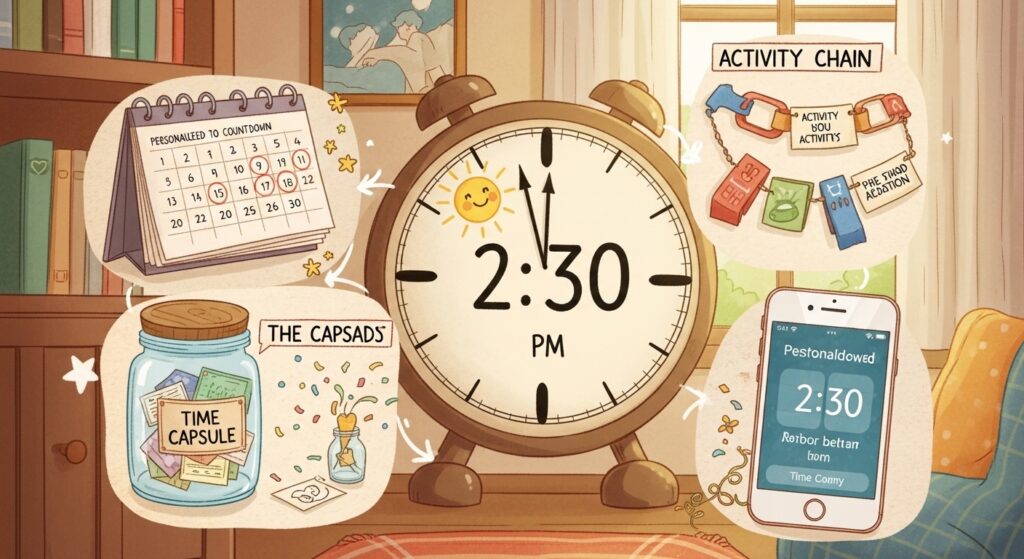
Try naming your countdown something meaningful inside your interactive timer tool. Add small rituals at each minute checkpoint, like stretching, breathing, or even just noticing one sound around you.
Use reminders / notifications system lightly, not aggressively, so time doesn’t feel like it’s chasing you. Let the real-time update mechanism support you, not pressure you.
You can even treat the waiting period as a creative space write, think, or simply observe how your mind reacts to time awareness exercises.
Because in the end, waiting for 2:30 PM is never just about the clock. It’s about how you inhabit the space between now and then.
Frequently asked Questions
how long till 2 30
The time left until 2:30 depends on the current time. It is simply the difference between now and 2:30 PM.
how many more minutes until 2 30 pm today
You calculate the exact minutes by subtracting the current time from 2:30 PM today. The result shows total minutes remaining.
how long until 2 30 pm
It is the remaining duration from the current moment to 2:30 PM. This can be in hours, minutes, or seconds depending on the time right now.
how many more minutes until 2:30 pm today
Just compare now with 2:30 PM and convert the difference into minutes. That gives the exact remaining time.
how long till 2:30
The remaining time changes every minute as the clock moves forward. It is the gap between now and 2:30 PM.
Read this Blog: https://zyroxin.com/how-long-is-8-inches/
Final Reflection: Time as a Soft Journey
There’s something quietly beautiful about all this, even if it feels ordinary on the surface. The act of waiting for 2:30 PM becomes a small mirror reflecting how we relate to life itself always slightly ahead, slightly behind, never fully still.
Maybe that’s the real story hidden inside every countdown. Not the arrival of the moment, but the experience of approaching it.
So the next time you wonder how long until 2:30 PM, don’t just measure it. Feel it, slightly imperfectly, slightly human, and let the seconds pass like they were meant to unrushed, unpolished, alive in their own way.