


You opened a text, saw “jw,” and probably paused for a second. Maybe longer.
Was it sarcasm? Flirting? A typo? Something rude?
That tiny two-letter texting acronym throws people off more than you’d think, especially on Snapchat, Instagram DMs, TikTok comments, and casual online conversations where context changes everything.
Here’s the quick answer:
JW usually means “Just Wondering” in texting and online messaging.
People use it to ask something casually without sounding too direct or pushy. Think of it as a softer way to ask a question.
Example:
“JW if you’re still coming tonight?”
Simple. Low-pressure. Curious.
But there’s more to it than that. The tone changes depending on who sends it, where it’s used, and what comes before it. On social media slang-heavy platforms, a tiny abbreviation can carry a lot of emotional tone.
Let’s break it all down properly.
What Does JW Mean in Text?
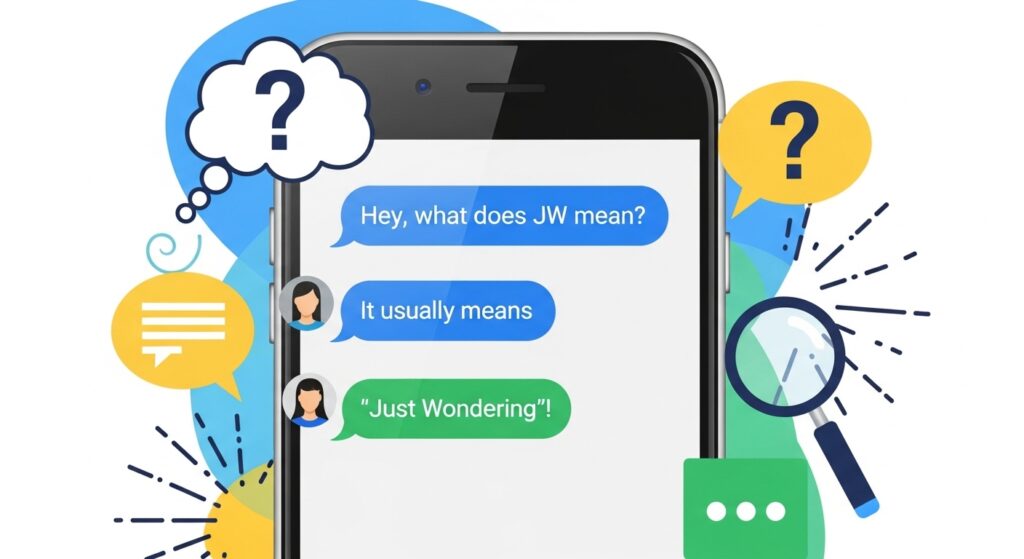
In most texting situations, JW stands for “Just Wondering.”
It’s part of modern internet slang and casual texting culture. People use it when they want to ask something without sounding too serious.
Instead of saying:
“Why didn’t you reply?”
Someone might text:
“JW why you disappeared lol”
See the difference? Same question. Much softer delivery.
That’s why JW became popular in digital communication. It lowers tension. Makes conversations feel lighter.
The Main Meaning of JW
The primary JW abbreviation meaning is:
- Just Wondering
That’s it. Short. Casual. Extremely common in messaging apps.
You’ll see it in:
- Snapchat chats
- Instagram DMs
- TikTok comments
- WhatsApp messages
- Gaming chats
- Group texts
Gen Z uses it constantly because fast communication favors short acronyms and internet abbreviations.
Why People Use JW
People rarely use “JW” randomly. There’s usually a social reason behind it.
Most often, they want to:
- Ask without sounding demanding
- Avoid awkwardness
- Show polite curiosity
- Start a conversation casually
- Sound relaxed in chat language
For example:
“JW if you watched that new Netflix show yet?”
That sounds friendlier than:
“Did you watch it yet?”
Tiny wording shift. Big tone difference.
How JW Is Used in Different Contexts

The meaning stays mostly the same across platforms, but the emotional tone changes depending on where you see it.
JW in Casual Texting
This is the most common usage.
Friends use JW during everyday conversations when they’re curious about something but don’t want to seem overly invested.
Examples:
- “JW what time you got home”
- “JW if you still talk to him”
- “JW why everyone’s posting black photos today”
It keeps the conversation relaxed.
JW on Snapchat
Snapchat slang tends to be fast, playful, and emotionally indirect. That’s exactly why JW fits perfectly there.
You’ll often see messages like:
“jw why you left me on opened 😭”
Or:
“JW if you’re mad at me”
On Snapchat, JW often softens emotionally sensitive questions.
JW on Instagram and TikTok
Instagram DMs and TikTok comments use JW similarly, though sometimes it feels slightly flirtier.
Examples:
- “JW where you got that outfit”
- “jw are you single”
- “JW if this song is dropping soon”
Lowercase “jw” is especially common in TikTok comments because users type quickly and casually.
JW in Gaming Chats
Gaming communities love abbreviations.
In online gaming chats, JW usually appears when players casually ask about strategy, schedules, or teammates.
Example:
“JW if we’re running ranked tonight”
Quick communication matters in gaming environments, so short forms dominate.
JW in Workplace Messages
This one gets tricky.
Some younger professionals use JW in Slack or informal team chats, but it depends heavily on company culture.
Safe example:
“JW if the meeting moved to 3?”
Not-so-safe example:
“JW why nobody answered my email”
Tone matters more in professional communication because abbreviations can sometimes look too casual.
Real Examples of JW in Conversations
Seeing real examples helps more than definitions ever will.
Friendly Examples
- “JW if you wanna grab coffee later”
- “JW how your trip went”
- “JW if you finished the assignment”
These feel conversational and low-pressure.
Romantic or Flirty Examples
Now things get interesting.
Sometimes JW acts as emotional camouflage. Someone asks a personal question while pretending to sound casual.
Examples:
- “JW who that girl was in your story 👀”
- “JW if you miss me too”
- “JW why you looked at me like that yesterday”
Translation? They care more than they admit.
Work Examples
- “JW if the deadline changed”
- “JW whether we’re meeting in person”
- “JW if the client responded yet”
Short. Efficient. Neutral.
Funny Examples
Internet slang thrives on humor.
Examples:
- “JW if my fridge light turns off when I close it”
- “jw why cats sprint at 3am”
- “JW if cereal counts as soup”
These kinds of texts show how casually the acronym fits into online conversations.
What Tone Does JW Convey?
Tone in texting changes everything.
A two-word phrase can sound polite, passive-aggressive, curious, nervous, or flirtatious depending on context.
Curious Tone
At its core, JW expresses curiosity.
Not interrogation. Curiosity.
That distinction matters.
Example:
“JW how you found that song”
Feels natural and conversational.
Softening a Question
This is probably the biggest reason people use it.
Compare these:
- “Why didn’t you call?”
- “JW why you didn’t call”
The second version sounds noticeably softer.
That’s why JW survives in texting culture. It helps people ask uncomfortable questions without sounding confrontational.
Avoiding Sounding Pushy
People often fear coming across as needy online.
JW acts like a social cushion.
Examples:
- “JW if you’re free later”
- “JW whether you saw my message”
It creates emotional distance while still asking the question.
Alternate Meanings of JW

Although “Just Wondering” dominates texting slang, JW can mean other things depending on context.
Jehovah’s Witness
Outside online messaging, JW often refers to Jehovah’s Witnesses, the Christian religious organization.
Example:
“My neighbor is JW”
That clearly has nothing to do with texting slang.
Context tells you which meaning applies.
Just Watching
Occasionally, people use JW to mean “Just Watching,” especially in livestream chats or gaming communities.
Example:
“Not playing rn, jw”
Less common. Still used.
Just Waiting
Another rare meaning.
Example:
“JW for the update”
Usually, though, “Just Wondering” remains the default interpretation.
JW vs Similar Texting Acronyms
Internet slang gets confusing because abbreviations overlap constantly.
Here’s how JW compares to other popular texting acronyms.
JW vs JK
- JW = Just Wondering
- JK = Just Kidding
One asks casually. The other signals humor.
Example:
“JW if you’re serious”
“JK don’t cancel me”
Very different purposes.
JW vs IDK
- JW = asking
- IDK = uncertainty
Example:
“JW why she left”
“IDK honestly”
One starts the question. One answers it.
JW vs TBH
- JW = curiosity
- TBH = honesty or opinion
Example:
“TBH I didn’t like the movie”
“JW why everyone hyped it”
JW vs FYI
- JW asks
- FYI informs
Example:
“FYI the event moved”
“JW what time now”
How to Reply to JW
Your response depends entirely on tone and relationship.
Casual Replies
- “Yeah probably”
- “Not sure honestly”
- “I was just busy”
- “Because traffic was terrible”
Keep it relaxed.
Flirty Replies
If the message carries romantic energy, playful replies work best.
Examples:
- “Why? You miss me?”
- “Maybe I’ll tell you later”
- “A little curious about me huh?”
Professional Replies
In workplace communication, clarity matters more than slang.
Examples:
- “Yes, the meeting changed to 3 PM.”
- “The client replied this morning.”
- “We’re still on schedule.”
When You Should Avoid Using JW

Not every conversation benefits from internet abbreviations.
Formal Emails
Avoid JW in:
- job applications
- academic communication
- client emails
- official business messages
It can appear overly casual or immature.
Professional Communication
Some workplaces embrace texting culture. Others absolutely do not.
If you’re unsure, spell things out.
Instead of:
“JW if the contract got approved”
Write:
“I was wondering if the contract was approved.”
Much safer.
Serious Conversations
JW can accidentally minimize emotional situations.
Bad example:
“JW why you ignored me after the funeral”
That tone feels disconnected from the seriousness of the situation.
Use full language during emotionally important conversations.
Frequently Asked Questions
What does JW mean in texting?
JW usually means “Just Wondering” in texting and online chats. It’s used to ask casual or soft questions.
What does JW mean on Snapchat?
On Snapchat, JW typically means “Just Wondering” and often appears in casual or emotionally curious conversations.
Is JW rude in text messages?
No. In most cases, JW actually makes questions sound more polite and less aggressive.
What does JW mean from a girl?
Usually the same thing: “Just Wondering.” But tone and context may make it sound flirtier or more emotionally loaded.
Does JW mean Jehovah’s Witness?
Sometimes. Outside texting slang, JW commonly refers to Jehovah’s Witnesses. Context determines the meaning.
How do you reply to JW?
Reply naturally based on the question being asked. Casual replies work best in most conversations.
jw meaning in text
In texting, “JW” usually means “Just Wondering.” People use it to ask casual questions without sounding too direct or serious.
what does jw mean snapchat
On Snapchat, JW commonly stands for “Just Wondering.” It’s often used in quick chats, streak conversations, or casual questions between friends.
jw meaning slang
In slang and online messaging, JW means “Just Wondering.” It helps soften a question and makes conversations feel more relaxed and friendly.
jw in text
When someone uses JW in text, they’re typically saying “Just Wondering.” It’s a common internet abbreviation used in casual texting and social media chats.
what does jw mean
JW most commonly means “Just Wondering” in texting slang. Depending on the context, it can also have other meanings like Jehovah’s Witness.
tsmeaning.com/what-does-jw-mean-in-text/
Final Thoughts
Texting slang changes constantly. One month it’s “JW.” Next month it’s something completely different.
Still, JW has stuck around because it solves a real communication problem. People want to ask questions without sounding too intense, demanding, or awkward.
So when someone texts “jw,” they’re usually trying to keep things light.
Most of the time, they’re simply saying:
“Hey… just wondering.”