

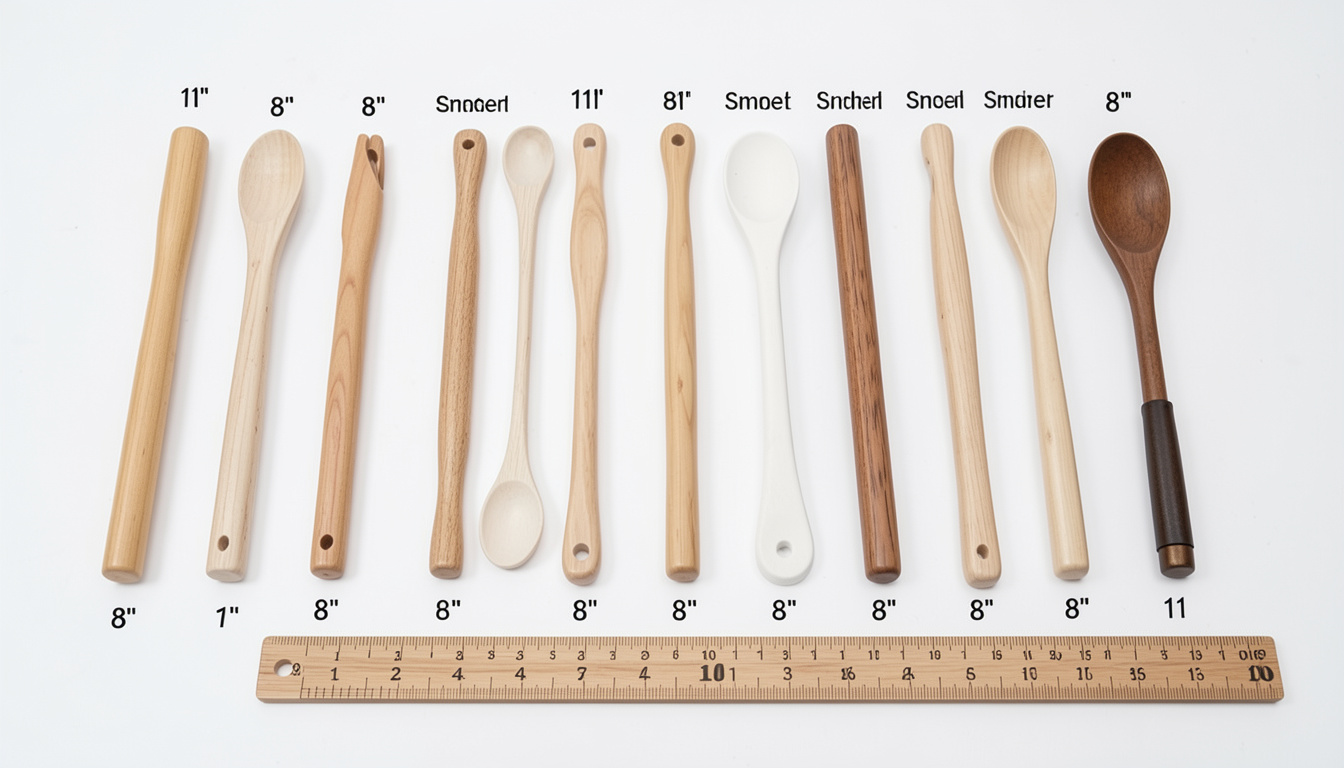
There’s something slightly funny about how humans deal with size. We say “8 inches” like it’s a fixed truth, but in real life, nobody really feels 20.32 cm or even 203.2 mm unless there’s something sitting right in front of them whispering, “hey, I’m about that long, you know.”
Most of us walk around doing silent visual size comparison, like tiny detectives of scale perception, using random stuff on desks, in kitchens, or even in pockets as mental rulers.
A Standard pencil? yeah, that’s a reference. A banana? surprisingly honest. And somehow our brains just… remember these things in weird fragments, like “ok this feels kinda 8-ish”.
I once heard a carpenter say, half laughing, “If I don’t have my tape measure, I just trust my hand and regret it later.”
That line stuck with me because it captures this messy human relationship with intuitive measurement and non-standard measurement units.
We’re not machines. We estimate, we guess, we adjust, and sometimes we’re impressively close… and other times, not even in the same galaxy.
So this isn’t just a list. It’s more like a walk through everyday life where ordinary objects quietly become rulers in disguise. And yeah, a bit imperfect, a bit human just like our measuring habits.
| # | Object | Approx. 8-Inch Reference Use |
|---|---|---|
| 1 | Standard pencil | Common everyday writing tool close to 7–8 inches |
| 2 | iPad Mini screen | Often used as a modern visual size reference |
| 3 | Small notebook | Pocket-sized journals used in offices and school |
| 4 | Mouse pad (compact) | Desk item useful for quick visual comparison |
| 5 | Kitchen knife (paring/chef small) | Blade length often around this range |
| 6 | Ruler (8-inch type) | Direct measuring reference tool |
| 7 | Human hand (stretched) | Natural body-based measurement estimate |
| 8 | Palm span (double palm) | Traditional body-based measuring method |
| 9 | Baseball bat grip section | Handle area used in sports sizing comparison |
| 10 | Hockey stick blade (small) | Sports gear segment used for control and fit |
| 11 | Small cardboard box | Packaging item often close to this length |
Kitchen & Desk Objects That Secretly Live Around 8 Inches
If you start looking around your home or office with “8 inches” in your mind, things suddenly feel like they’re performing a secret audition for measurement duty. Desks especially become full of silent rulers pretending they’re just “items”.
A Small notebook often lands very close to this range, depending on brand and style, sitting neatly in that sweet spot of portability and usefulness. It’s one of those office items size reference objects people underestimate until they need to sketch something quickly.
A Mouse pad also plays this quiet role. Not the oversized gaming ones, but the compact office versions. You never think of it as a measuring tool, yet there it is, quietly supporting spatial organization on your desk.
Then there’s the humble Standard pencil, which usually hovers around 7 to 8 inches before sharpening chaos takes over. Funny how something so common becomes a mental ruler for object size estimation without anyone officially agreeing on it.
A Medium banana is another classic. Everyone jokes about banana sizing online, but in real life it actually works as a surprisingly consistent approximate measurement reference. Slight bends included, of course.
Even an iPad Mini screen gives us a modern tech-based comparison point, showing how informal measurement systems evolve with gadgets. People don’t say “8 inches”, they say “about an iPad mini-ish length”, which is honestly more intuitive sometimes.
A Soda cans cluster (placed end-to-end) can also stretch close to that range, especially when you’re stacking imagination with reality. Not perfect science, more like DIY measurement hacks your brain invents while bored.
And oddly enough, a Small cardboard box used for packaging cables or accessories often falls around this measurement too. It’s the kind of object you only notice when you’re trying to re-pack something and suddenly become a part-time engineer.
One office worker once said, “I don’t use rulers anymore, I use vibes and old Amazon boxes.” It sounds like a joke, but it’s basically modern everyday cognitive heuristics in action.
Body-Based Measurement & Human Scale Tricks (Yes, Your Hand Is a Ruler)
Human beings have always measured the world using themselves first. Long before fancy tools, there was just the body—imperfect, inconsistent, but always available. This is the foundation of anthropometric measurement and honestly, it still quietly runs our daily lives.
Your Human hand (stretched) is probably the most underrated measuring device you own. From thumb tip to pinky stretch, many people land somewhere near the 7–9 inch range depending on genetics and snacks consumed over the years.
A Palm (single and double palm span) is another ancient method of estimation. Builders in old cultures literally relied on palm-based systems, part of traditional measurement systems that didn’t care about precision as much as practicality.
Your Fingers also become units when you’re in a hurry. “About four fingers long” is a sentence that somehow makes perfect sense in kitchens, workshops, and even random DIY conversations.
The Thumb length is another sneaky one. It’s small, yes, but when multiplied mentally or used for comparison, it becomes part of your internal mental ruler concept, especially when doing quick fixes or spacing objects.
These body-based methods are deeply tied to human estimation ability and scale perception, where the brain constantly recalibrates based on context. It’s not perfect, but it’s surprisingly adaptive.
A friend once joked, “My dad doesn’t believe in inches, he believes in hands and disappointment.” That humor hides a truth: we still rely on body-based measurement systems, even when rulers exist everywhere.
And when you combine all these together, you get a living, breathing system of informal learning through environment, where measurement isn’t taught it’s absorbed.
Sports & Tools That Naturally Sit in the 8-Inch Zone of Reality
Now here’s where things get interesting. Sports equipment and tools often come with standardized sizes, but even within those standards, many components drift around the 8-inch mark in ways that feel almost accidental.
A Hockey stick blade (small) section often sits in that general range depending on design, especially youth versions. It becomes a great example of sports gear measurement size used for control and precision.
The Baseball bat grip area where hands actually hold can also fall near this length. It’s fascinating how much design thought goes into something that still ends up feeling like a natural extension of the human arm.
A Tennis racket handle is another strong reference point. While full rackets are much larger, the handle itself sits comfortably in the realm of racket handle dimensions that align closely with human grip logic and comfort.
Similarly, a Lacrosse stick grip section reflects how sports tools are shaped by functional improvisation and ergonomic needs, not just strict numerical obsession.
Then we step into kitchen and workshop territory with a Chef’s knife / kitchen knife / paring knife, where blade lengths often hover around or slightly above 8 inches depending on type. It’s a perfect blend of control, balance, and utility designed for real-world movement, not abstract math.
Even some compact DIY crafting tools and handheld devices used in home improvement echo this measurement range, especially when portability matters more than precision.
A retired carpenter once said, “Good tools don’t just measure right, they feel right in your hand.” That sentiment reflects centuries of historical carpentry measurement methods, where feel often mattered as much as numbers.
In all these examples, you can see how everyday objects length list thinking overlaps with design psychology. Things are shaped not just for function, but for human comfort, grip, and intuition.
Why Our Brains Keep Turning Objects Into Rulers
The strange part is not the objects it’s us. The human brain is constantly doing silent math, running pattern recognition in size without asking permission.
We use everyday objects as rulers because it reduces effort. Instead of pulling out a tape measure, we rely on stored comparisons. That’s cognitive efficiency, wrapped in laziness, wrapped in genius (kind of).
This is why DIY measurement hacks feel so natural. You don’t learn them formally; you just notice them. A pencil here, a hand span there, a box that “looks about right”.
It’s also why spatial awareness training happens unintentionally. Every time you pick up a familiar object and compare it to another, your brain is sharpening its internal mapping system.
A small quote I once read in a parenting forum said: “Kids don’t learn inches first, they learn ‘about this big’ first.” That’s the essence of informal measurement systems they’re emotional before they’re numerical.
Frequently Asked Questions
8 inches comparison
An 8-inch length is roughly equal to a standard pencil, a medium banana, or the width of an iPad Mini screen. It is a common reference size used for quick everyday estimation.
8 inch comparison
8 inches can be visually compared to objects like a chef’s knife, stacked soda cans, or two palms placed together. These comparisons help in quick, ruler-free measurement.
8 inch objects
Common objects around 8 inches include a standard pencil, medium banana, popsicle sticks (stacked), and a small kitchen knife. These items are often used as informal measuring tools.
8 inch things
Things that are about 8 inches long include an iPad Mini screen, baseball bat grip, hockey stick blade, and stacked US quarters. These are useful for visual size understanding in daily life.
what object is 8 inches long
Objects that are approximately 8 inches long include a pencil, banana, chef’s knife, and two stacked popsicle sticks. These are commonly used as quick reference tools for estimating length.
Read this blog: https://zyroxin.com/long-until-230-pm/
Conclusion: The Beauty of Approximate Living
At the end of the day, 8 inches is not just a measurement it’s a quiet agreement between the world and your perception. It’s a handshake between precision and guesswork, between rulers and memory.
From a Standard pencil resting on a desk to a Human hand (stretched) estimating space mid-air, life is full of these small measurement moments that nobody really announces but everyone performs.
And maybe that’s the beauty of it. We don’t always need perfect accuracy. We need enough understanding to build, cook, fix, create, and move through space without overthinking every millimeter.
So next time you pick up a Small notebook, or glance at a Medium banana, or casually stretch your fingers while guessing length, just notice it.
You’re participating in an ancient, messy, surprisingly elegant system of object-based measuring that humans have been refining forever without even calling it a system.
If you had to measure the world using only what’s around you right now, what would your personal 8-inch reference be?
People usually don’t agree on answers to that question… and honestly, that disagreement is what makes it kind of beautiful.