

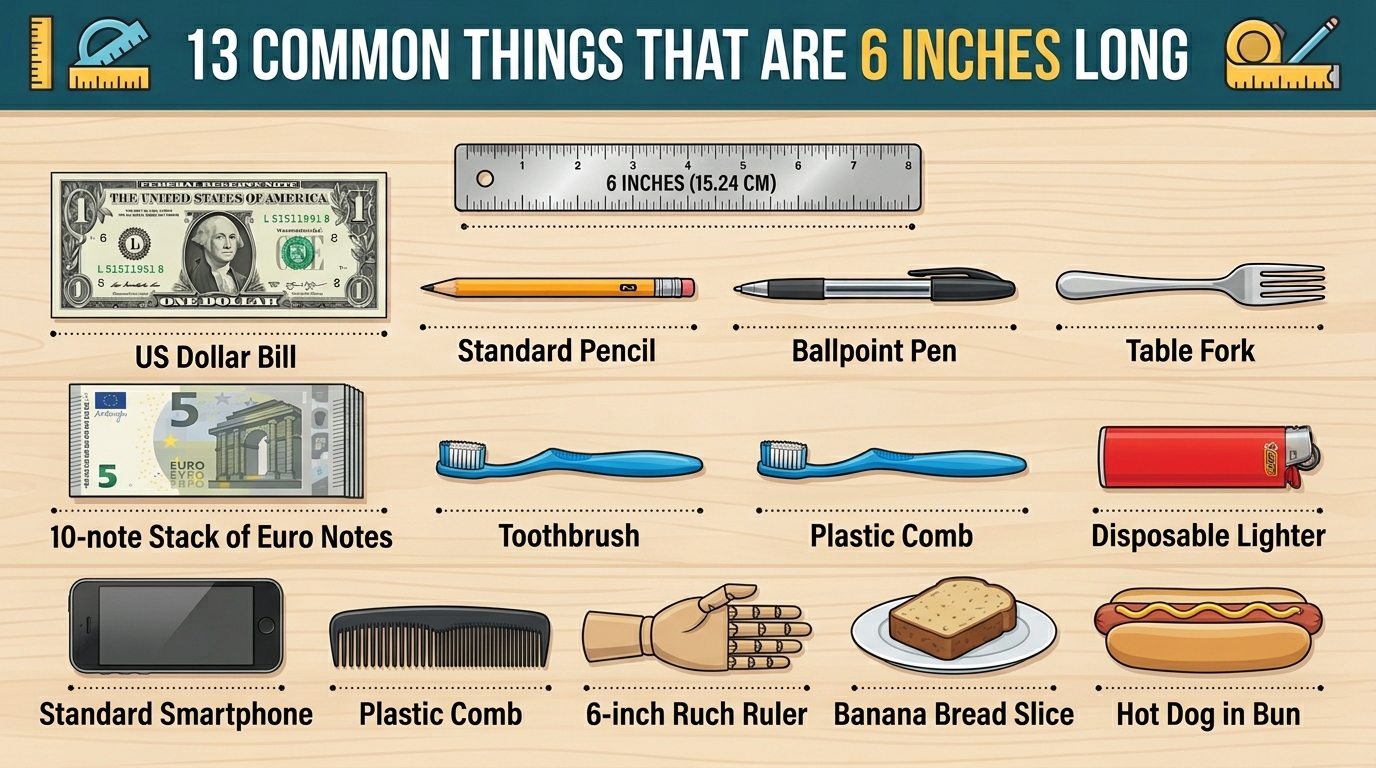
Have you ever stood in a kitchen, workshop, classroom, or even a grocery store and suddenly wondered, “Wait, how long is 6 inches actually?” It’s one of those oddly specific measurements that pops up everywhere.
Maybe you’re buying furniture online, estimating a craft project, checking if a phone will fit in your pocket, or helping a child with homework. And somehow, the ruler is never where you left it. Funny how that happends.
The truth is, most people don’t walk around carrying a tape measure. Instead, we rely on familiar objects as visual references.
Knowing a few things that are 6 inches long can make everyday life surprisingly easier. A wallet, a toothbrush, a banana these ordinary items quietly become measuring tools when nobody’s looking.
What’s interesting is that 6 inches sits in a sweet spot. It’s not tiny, not large. It’s exactly half foot, equal to 15.24 centimeters or 152.4 millimeters, making it one of the most useful reference lengths for both imperial measurements and metric users.
In this guide, we’ll explore thirteen common objects that help answer the question, “how long is 6 inches?” Along the way, you’ll discover practical measuring tricks, interesting size comparisons, and little details that most people never notice untill someone points them out.
Understanding 6 Inches Before Comparing Objects
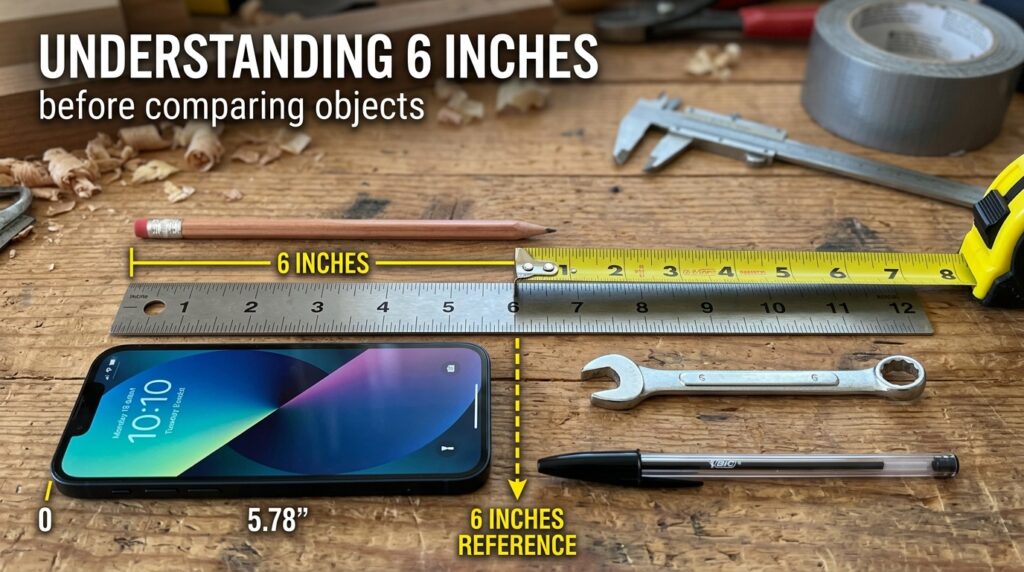
Before jumping into examples, it helps to visualize the measurement itself.
A standard 12-inch ruler divided directly in half gives you 6 inches. It’s also equivalent to:
- Half of a standard ruler
- 15.24 centimeters
- 152.4 millimeters
- Roughly the length of an adult male’s hand from wrist crease to fingertips (depending on hand size)
- About the width of two average smartphones placed side by side
These measurement reference objects become incredibly useful whenever you need quick estimates.
1. A US Dollar Bill
One of the most reliable examples is the US Dollar Bill.
A dollar bill measures approximately 6.14 inches long. That’s remarkably close to six inches and makes it one of the easiest real world size examples to remember.
Many travelers and students use this trick when they don’t have access to measuring tools. Pull out a dollar bill, and you’ve got a near-perfect reference.
What’s amusing is that millions of people handle currency daily without ever realizing they’re carrying a measurement aid in their wallet. Kinda feels like a hidden superpower nobody talks about.
2. Many Men’s Wallets
A standard Men’s Wallet often measures between 4.5 and 6 inches when folded, depending on the style.
Longer bifold wallets frequently approach the six-inch mark, making them useful for length estimation.
Because wallets are carried almost everywhere, they become one of the most practical household items around 6 inches even when you’re nowhere near home.
Some people actually compare pocket dimensions to their wallet before buying clothing online. Strange little life hack, but it works pretty good.
3. A Toothbrush
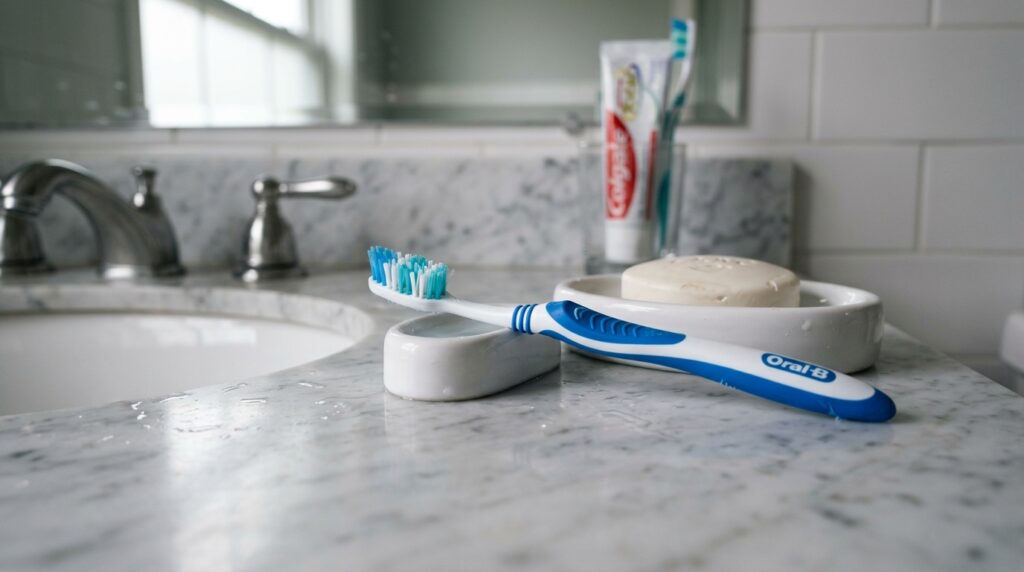
The average Toothbrush, including popular models from brands such as Colgate, typically measures between 5.8 and 7.3 inches.
Many standard toothbrushes land very close to the six-inch range.
Think about it. Every morning and evening you’re holding a surprisingly accurate measuring reference without giving it a second thought. The toothbrush may clean teeth, but it also quietly teaches length visualization every single day.
4. The iPhone 16 Pro
Modern smartphones make excellent comparison tools.
The iPhone 16 Pro measures approximately 5.89 inches in height, placing it extremely close to the six-inch benchmark.
Because phones travel everywhere with us, they have become modern-day rulers. Ask someone to estimate how big is 6 inches, and showing them a smartphone often communicates the size instantly.
Technology changes fast, yet measurements remain oddly comforting.
5. A Small Banana
Bananas vary significantly in size, but many small bananas measure around six inches long.
This makes them surprisingly useful for visualizing 6 inches.
Interestingly, grocery stores often classify bananas by size categories, and many snack sized varieties fit neatly within this range. Next time you’re making smoothies or baking banana bread, you’ll probably notice the measurement without even trying.
Food has a funny way of sneaking educational moments into everyday life.
6. A Paperback Book

Many compact Paperback Book editions measure approximately six inches across their shorter dimension.
If you’ve ever carried a novel in your backpack or purse, you’ve likely carried another practical measurement reference.
Books feel different because they connect measurements with memories. One person sees six inches; another sees a favorite story, a rainy afternoon, or a dog eared chapter that never quite got finished.
Measurements are numbers, sure, but sometimes they’re also nostalgia.
7. A Standard Screwdriver Handle
Many household screwdrivers feature handles that measure close to six inches.
The shaft lengths vary widely, but the grip section frequently falls near this measurement.
In DIY tasks, crafting, and home repairs, visual references become invaluable. Experienced carpenters often estimate distances surprisingly accurately using familiar tool dimensions.
It’s not magic. It’s repetition. Although sometimes it does look a bit magical, honestly.
8. Common Door Handles
Many residential Door Handle designs measure between five and six inches in total length.
While styles vary, modern hardware manufacturers often produce handles within a fairly consistent range.
This consistency helps with interior design hardware planning and replacement projects. If you’ve ever stood in a hardware store trying to imagine dimensions, you know how useful familiar references can become.
A handle is just a handle untill you’re trying to estimate a measurement from memory.
9. Kitchen Spatulas
Many Kitchen Spatula models feature heads or working sections measuring around six inches.
Anyone who enjoys cooking eventually develops a surprisingly accurate eye for size. Baking recipes, portion control, and cookware dimensions all encourage constant visual estimation.
Family kitchens are full of hidden measuring lessons. Grandmothers have known this for generations, even if they never called it quick measuring techniques.
10. Stacks of Post it Notes
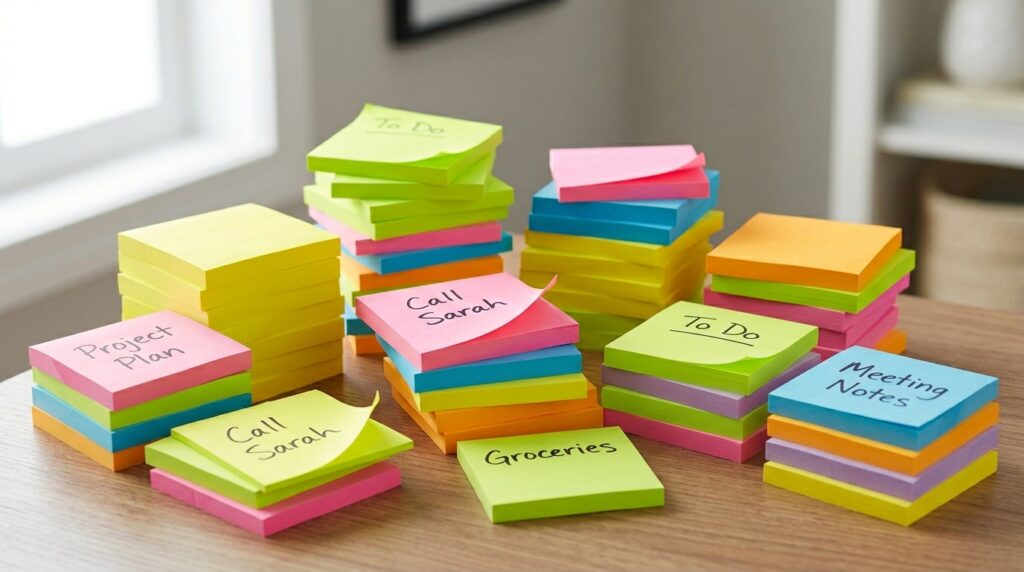
A stack of multiple Post-it Notes can easily create a six-inch reference depending on quantity and arrangement.
Though a single sticky note is much smaller, grouped notes become handy visual tools.
Office workers may smile at this one because desks are often covered with enough sticky notes to measure practically anything. Maybe not scientifically, but close enough for everyday situations.
11. Half of a 12 Inch Ruler
This example sounds obvious, yet it deserves mention.
A 12-inch ruler divided in half gives exactly 6 inches.
Many people instinctively fold paper, strings, or visual spaces into halves. That’s because our brains naturally understand symmetry better than precise measurement.
When estimating dimensions, finding the halfway point is often quicker than reaching for a ruler anyway.
12. Two Credit Cards End to End
A standard Credit Card or Bank Card measures approximately 3.37 inches long.
Place two cards end to end and you get roughly 6.74 inches.
While not exact, it’s close enough for many informal measuring situations. This trick is particularly useful because cards are carried almost universally.
Tiny rectangles, huge usefulness.
13. The Width of an Adult Hand
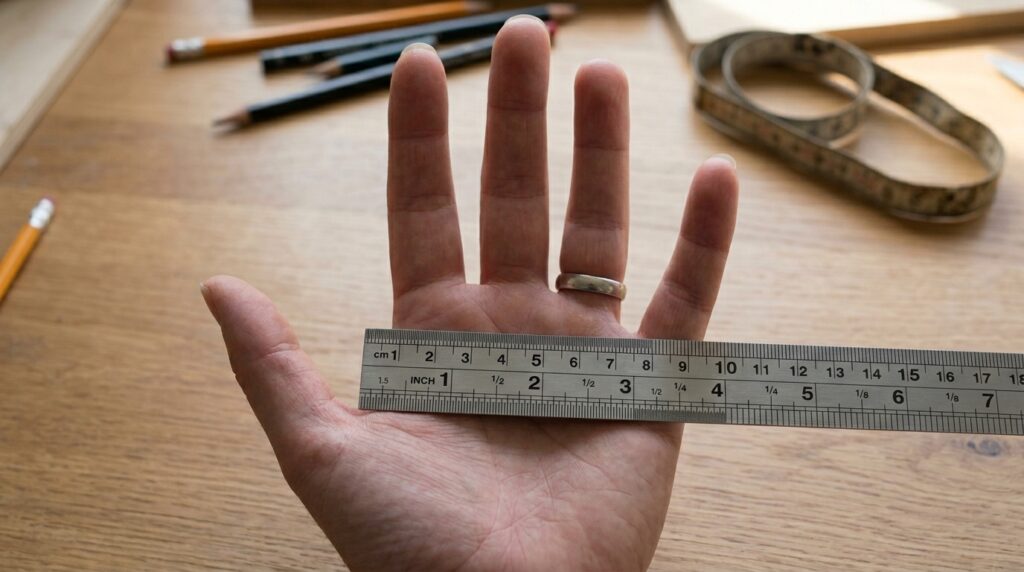
For many adults, the span from the base of the palm to the tip of the middle finger falls close to six inches.
Human-body measurement systems have existed for thousands of years. Long before rulers, people used hands, feet, fingers, and arm spans to estimate lengths.
Ancient builders, traders, and craftspeople relied heavily on body-based measurements. It’s imperfect, sure, but remarkably practical.
And somehow, after centuries of technological progress, many of us still do exactly the same thing.
Why Knowing Common Things That Are 6 Inches Long Is Useful
Knowing common things that are 6 inches long isn’t just trivia.
It helps with:
- Furniture shopping
- Home decorating
- Craft projects
- School assignments
- DIY repairs
- Gardening
- Cooking preparation
- Package size estimation
- Online shopping comparisons
These familiar objects serve as measurement reference objects when rulers aren’t available.
In a world filled with dimensions, visual references save time and reduce guesswork. Not perfectly, of course, but often enough.
Quick Measurement Hacks Without a Ruler
If you’re wondering how to estimate 6 inches without a ruler, here are a few practical methods:
- Compare against a smartphone like the iPhone 16 Pro
- Use a dollar bill as a reference
- Estimate using a toothbrush
- Compare with your hand length
- Use two bank cards placed together
- Visualize half of a standard ruler
These quick measurement hacks are commonly used by homeowners, teachers, crafters, and even professional tradespeople.
The best part? Most require objects already sitting nearby.
Imperial vs Metric Measurements
Many people encounter confusion when switching between systems.
Here’s a simple conversion reference:
- 6 inches = 15.24 centimeters
- 6 inches = 152.4 millimeters
- 6 inches = 0.5 feet
- 6 inches = half foot
Understanding both systems improves communication, especially in international settings where metric units dominate while countries like the United States still commonly use inches.
The International Organization for Standardization (ISO) promotes consistent measurement standards globally, helping products and industries communicate dimensions accurately.
Numbers may change formats, but six inches stays six inches no matter where you are.
Surprising Objects That Almost Measure Six Inches
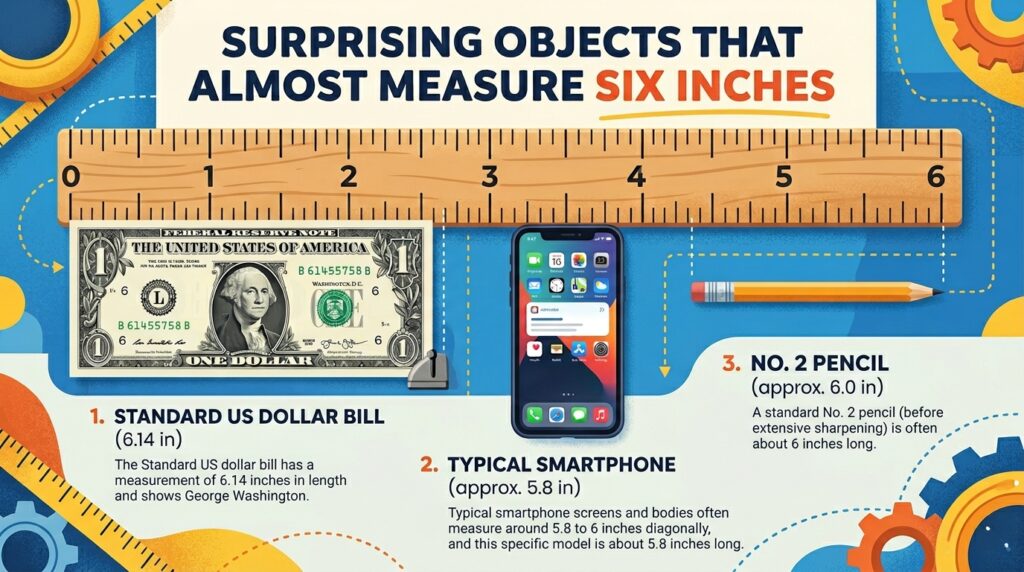
Several items come surprisingly close:
- Certain paperback novels
- Compact kitchen utensils
- Small bananas
- Door hardware
- Smartphone models
- Travel-sized notebooks
- Some cosmetic brushes
Many of these fall within fractions of an inch from the target measurement, making them excellent size approximation tools.
Close enough often becomes useful enough.
Frequently Asked Questions
6inches
6 inches is equal to 15.24 cm. It’s about the length of a standard pencil or two credit cards placed end to end, making it a useful size for quick visual comparison.
Read this Blog: https://zyroxin.com/long-until-230-pm/
Final Thoughts
Learning about things that are 6 inches long changes how you see everyday objects. Suddenly, a dollar bill isn’t just money. A toothbrush isn’t just part of your morning routine. A smartphone becomes a measuring stick. A banana becomes a geometry lesson hiding inside lunch.
The beauty of length comparison lies in its practicality. Once you recognize a few common references, estimating dimensions becomes quicker, easier, and oddly satisfying. You start noticing measurements everywhere. Door handles, books, wallets, kitchen tools they all begin telling a quiet little story about size.
The next time someone asks, “What does 6 inches look like?”, you won’t need a ruler. You’ll have thirteen familiar examples ready to paint the picture.
And honestly, that’s a neat little skill to carry around, even if you don’t realize you’re carrying it.