

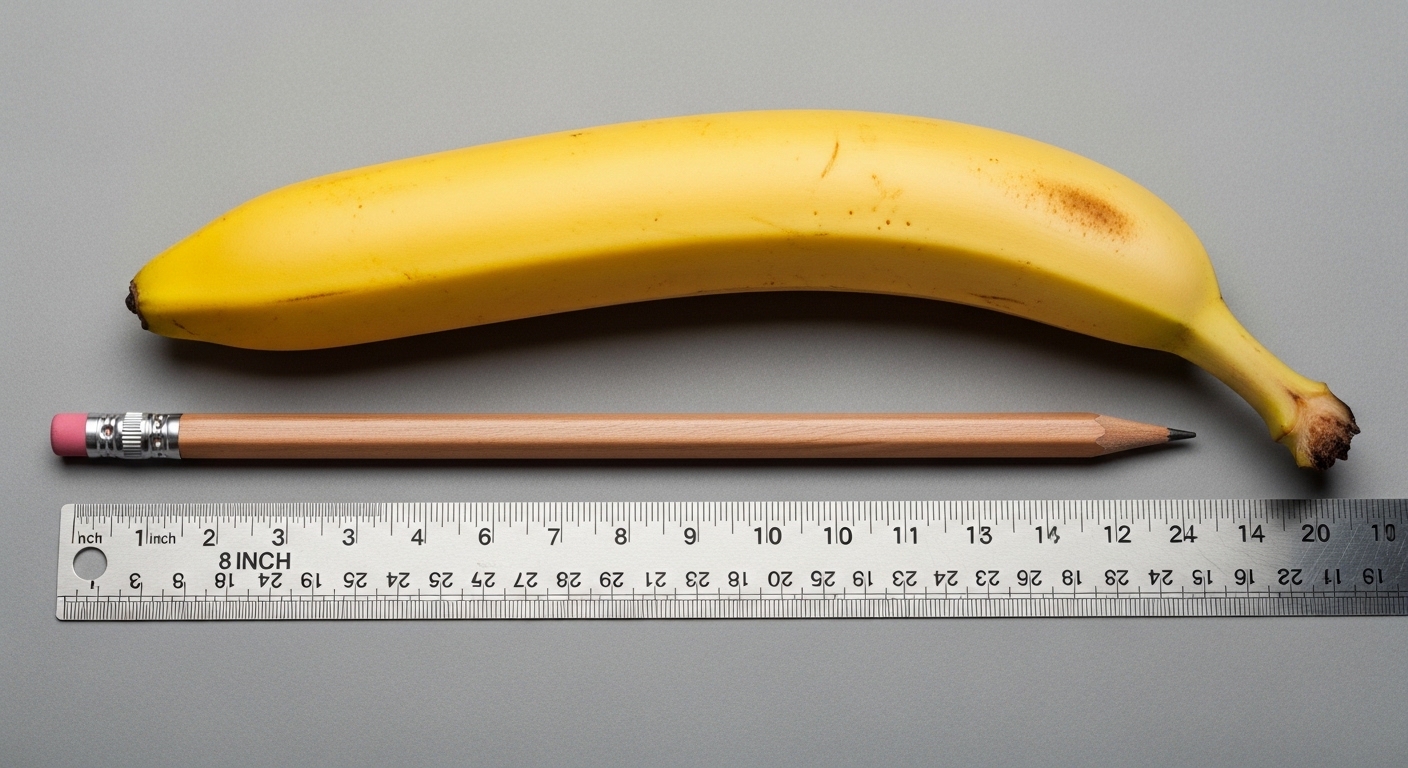
I still remember the first time someone casually said “oh it’s about 8 inches long” while pointing at a kitchen drawer. And I swear, in my mind, I saw nothing clear at all. Like, what even is 8 inches in real life? Not on paper, not in math class, but in messy everyday life where nothing is ever properly measured.
Over time, I started noticing how often we rely on Intuitive measurement, those silent guesses we make using hands, objects, and memory instead of rulers. Funny thing is, most people don’t even realize they’re doing it.
We’re constantly using visual comparison, size perception, and those little mental shortcuts like “that looks about the size of a banana” or “maybe two palms long, yeah”.
And honestly, 8 inches (≈ 20.32 cm or 203.2 mm) becomes this weirdly perfect reference point. Not too small, not too big just right enough to appear in kitchens, offices, sports gear, and even DIY corners of the house where tape measures mysteriously vanish.
So let’s walk through 11 real, everyday things that are surprisingly close to 8 inches long, with a bit of human messiness, cultural flavor, and those slightly imperfect comparisons we all secretly rely on
| # | Object | Why it matches ~8 inches |
|---|---|---|
| 1 | Medium banana | Typical medium banana length is close to 8 inches |
| 2 | Standard pencil | Many standard pencils are around 7–8 inches long |
| 3 | Small kitchen knife | Blade + handle often totals near 8 inches |
| 4 | iPad Mini | Screen diagonal perception is close to this scale |
| 5 | Mouse pad (small) | Compact desk mouse pads often measure ~8 inches |
| 6 | Toilet paper roll | Height/diameter closely matches ~8-inch reference feel |
| 7 | US quarters stack | Rough stack height of multiple coins approaches this length |
| 8 | Soda cans (stacked) | Two cans stacked approximate ~8 inches |
| 9 | Hockey stick blade | Blade section often falls near this range |
| 10 | Baseball bat grip | Grip portion is roughly around 7–8 inches |
| 11 | Notebook (small) | Pocket notebooks often measure close to 8 inches in height/width |
What 8 Inches Long Feels Like in Real Life (Not on Paper)
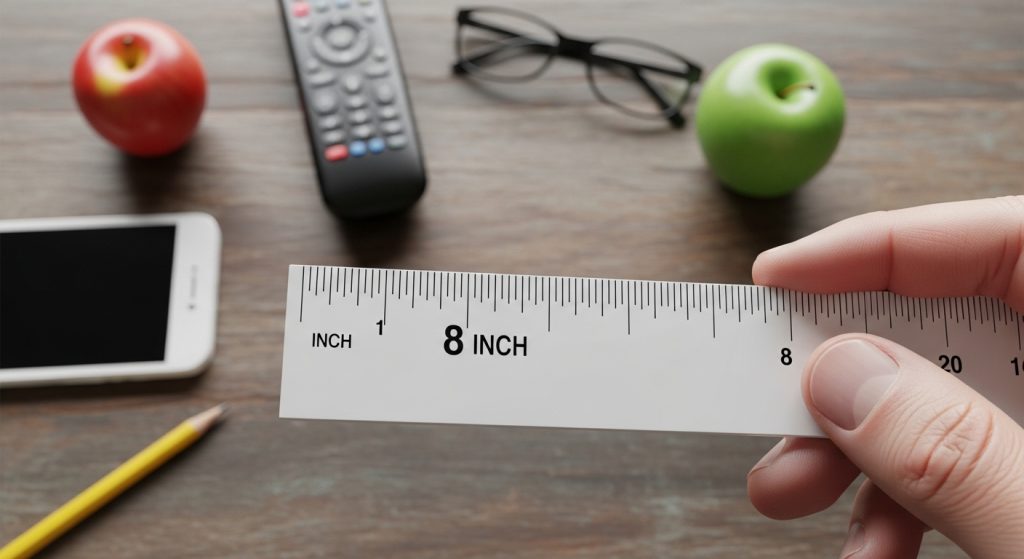
If you stretch your human hand (general) or even just your palm (single and double palm measurement), you’re already halfway into the world of approximate measurement.
For many adults, from the tip of the thumb to the base of the palm gives a surprisingly close pencil length reference, often hovering near the 8-inch mark.
It’s kind of wild how we use everyday heuristics without noticing. Like, “this feels like two fingers and a bit more” or “that’s about a stretched male hand (stretched) length.”
People across cultures have been doing this forever. In India, Italy, and many African regions, traditional measurement systems often relied on hand spans and finger widths. No rulers, no apps, just pure spatial awareness and lived experience.
So yeah, 8 inches isn’t just math it’s memory, body, and guesswork stitched together.
11 Common Things That Are 8 Inches Long in Everyday Life
Now let’s get into the real world stuff. These are objects you’ve probably held, ignored, or underestimated at some point.
1. The Standard Pencil and Everyday Desk Items
A standard pencil is one of the easiest references for 8 inches long estimation. Not all pencils are identical, but many sit very close to this length, making them a natural human ruler concept.
- Classic wooden standard pencil
- Slightly worn-down classroom pencil
- Carpenter pencils (some variants)
- Mechanical pencil bodies (excluding lead extension)
- Colored pencils used in art kits
- Office stationery pencil stubs
- Promotional branded pencils
- Sketching pencils in art sets
- Children’s beginner pencils
- Recycled short pencils from offices
It’s funny how something so basic becomes a portable measurement system without trying.
2. Banana, Kitchen Items, and Food-Based Measurement
A medium banana is another surprisingly good reference for 8 inches long. Not perfect, but close enough for kitchen measurement improvisation.
- Medium banana
- Small chef’s kitchen knife / chef’s knife / paring knife
- Compact toilet paper roll
- Short cardboard box sides
- Stack of US quarters (stacked coins) reaching similar height
- Two stacked soda cans (stacked) laid lengthwise approximation
- Small books (art books) in paperbacks
- Notebook (small notebook) width or height
- Wrapped sandwich foil pack
- Compact butter stick packaging in some regions
These are classic DIY measurement hacks you didn’t know you were already using.
3. Office Desk Objects and Portable Measurement Clues
Workspaces are full of sneaky rulers disguised as normal things.
- iPad Mini (screen size) diagonal roughly close perception-wise
- Mouse pad (AmazonBasics small mouse pad)
- Stapler length (medium office staplers)
- Standard desk nameplate holders
- Compact file folders
- Pen holder containers
- Sticky note stacks
- Desk calendar blocks
- Wireless keyboard edge sections
- Small desk organizers
This is where office / desk-based measurement becomes an unconscious habit, especially when you’re too lazy to find an actual ruler.
4. Sports Equipment and Body Movement References
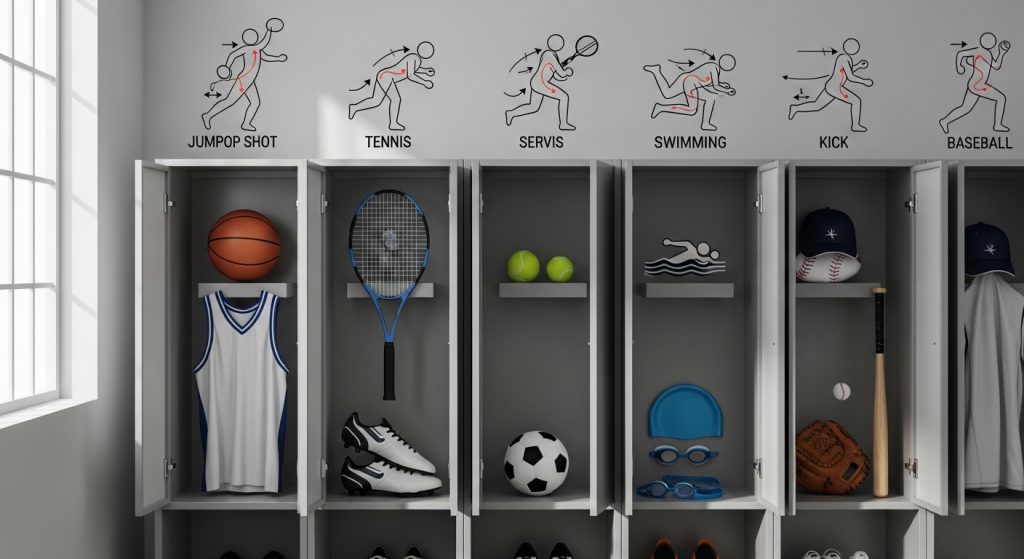
Sports gear is surprisingly standardized, which makes it perfect for sports equipment sizing comparisons.
- Hockey stick blade
- Baseball bat grip section
- Tennis racket handle
- Lacrosse stick grip
- Training baton segments
- Small resistance bands (folded)
- Wrist guards or strap lengths
- Foam training blocks
- Mini cones used in drills
- Gym grip attachments
Athletes often rely on crafting measurement techniques without realizing it, especially during practice setups.
5. Human Body-Based Measurement Systems
This is where things get really old-school and kind of beautiful.
- Thumb length
- Width of a palm (single and double palm measurement)
- Span between thumb and index finger
- Distance across fingers
- Half human hand (general) span
- Width of two stacked palms
- Wrist to mid-hand segment
- Finger joint spacing estimation
These are part of ancient hand-span measurement systems, still used informally in many regions. It’s raw, imperfect, but weirdly reliable.
6. Crafting, DIY Projects, and Home Hacks
If you’ve ever done DIY work, you’ve definitely eyeballed 8 inches before.
- Wooden craft sticks (grouped popsicle sticks)
- Scrap fabric strips
- Small sewing ruler substitutes
- Candle sticks (decorative short ones)
- Wall hook spacing guesses
- Picture frame border widths
- Handmade bracelet chains
- Small shelf brackets
- Glue stick lengths
- Paper cutting guides
This is where DIY hacks and crafting tools replace actual measurement tools most of the time.
7. Educational and Learning-Based Measurement Tools
Teachers love using everyday objects for measurement learning techniques.
- Ruler-less classroom demonstrations
- Object stacking lessons
- Paper strips cut to size
- Geometry boards
- Wooden teaching blocks
- Visual estimation cards
- Classroom manipulatives
- Paper folding guides
- Student craft kits
- Measurement comparison charts
Kids often learn numerical reasoning faster when they see real-world objects instead of numbers alone.
8. Cultural and Traditional Measurement Systems
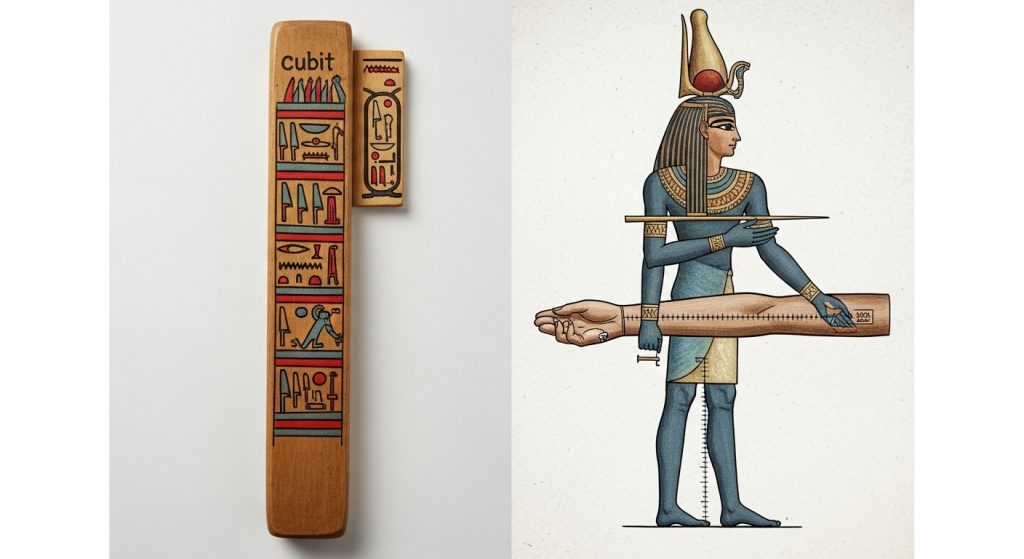
Across history, people used body and object-based systems long before rulers existed.
In parts of India and Italy, palm-based measurement traditions (India, Italy) are still remembered in folk crafting. Some African traditions use finger-based measurement systems (Africa examples mentioned) for tailoring and carving.
These systems reflect deep human perception of size and pattern recognition in objects, where precision mattered less than practicality.
9. Books, Paper, and Stationery Comparisons
Books are sneaky rulers too.
- Small paperback novels
- Thin books (art books)
- Spiral notebook (small notebook)
- Sketch pads
- Magazine width sections
- Envelope stacks
- Paper reams folded
- Sticky note cubes
- Journal diaries
- Recipe cards
This is classic everyday object comparison used in schools and offices alike.
10. Household Storage and Miscellaneous Objects
Households are full of hidden measuring references.
- Small cardboard box
- Toilet paper roll (already mentioned but still classic)
- Drawer compartments
- Spice jars
- Remote controls (short ones)
- Candle holders
- Storage baskets
- Soap bars in packaging
- Small plastic containers
- Drawer organizers
These all fall into home DIY projects and practical sizing methods without you even noticing.
11. Visual Anchors: The Brain’s Estimation Library
Finally, the weirdest category your brain itself.
We all carry mental references like:
- A remembered standard pencil
- A familiar banana
- A known iPad Mini (screen size) feel
- A rough memory of stacked coins or cans
- A mental snapshot of a ruler segment
This is pure size perception / scale perception, where your brain builds a library of mental mapping of length over time.
It’s not exact. It’s human. And sometimes slightly off, but still surprisingly useful.
FAQ: 8 Inches Long in Real Life
Why do people use body parts for measurement?
Because before tools existed, humans relied on hand-span measurement systems and everyday heuristics for survival and trade.
Is 8 inches a common reference in daily life?
Yes, it appears often in kitchen tools as rulers, stationery, and even sports equipment.
How accurate are visual estimates?
They rely on estimation skills and can vary, but repeated exposure improves spatial awareness.
Can children learn measurement this way?
Absolutely. Using objects like pencils or bananas improves educational measurement learning and hands-on learning.
8 inches comparison
8 inches is roughly the length of a standard pencil or a medium banana. It is a common reference size used for quick everyday estimation.
8 inch comparison
Many everyday items like a kitchen knife blade or an iPad Mini screen are close to 8 inches long, making it easy to visualize without a ruler.
8 inch objects
Objects such as popsicle sticks (stacked), soda cans (3 aligned), and US quarters (stacked 8 coins) are often used to represent 8 inches in simple measurements.
8 inch things
Common 8-inch things include a baseball bat grip, small hockey stick blade, and some notebook edges, all useful for quick size comparison in daily life.
what object is 8 inches long
A standard pencil, medium banana, and chef’s knife are typical examples of objects that are around 8 inches long and commonly used for estimation.
Read this Blog: https://zyroxin.com/sm-meaning-in-chat/
Conclusion: Why 8 Inches Is More Than Just a Number
At first glance, 8 inches seems like a simple measurement. But once you start noticing it, it becomes a quiet language of objects, hands, and memory. From a standard pencil to a medium banana, from a hockey stick blade to a mouse pad, the world is quietly built on these invisible comparisons.
What makes it beautiful is not precision it’s familiarity. Our ability to estimate, adapt, and connect objects through intuitive sizing, even when we don’t have tools nearby.
And maybe that’s the real lesson here: measurement is not just math. It’s human experience folded into everyday life.
So next time you pick up something and think “this feels about 8 inches long,” you’re not guessing. You’re participating in an ancient, ongoing tradition of human perception one palm, one pencil, one banana at a time.
If you’ve got your own weird or funny comparisons for 8 inches, you should share them somewhere. People always have those slightly odd mental rulers hidden in their daily life, even if they don’t realize it at first.