

There’s something strangely personal about staring at a clock and asking yourself, again and again, how long until 2:30 PM. It’s not just numbers, not just a sterile slice of afternoon time.
It feels like a tiny emotional tunnel you’re walking through, where every second kind of stretches like chewing gum left too long in the mouth. A bit sticky, a bit slow, sometimes oddly comforting too.
On days like 03/28/2026, people around the world some in offices, some in kitchens, some just lying on couches half-listening to the ceiling fan—start to feel this odd pull toward 2:30 PM (primary target time).
Maybe it’s a meeting, maybe a call, maybe a life moment that feels way too important for a single timestamp. Time becomes slippery and wily, like it’s laughing softly and refusing to cooperate properly.
In Japan, there’s often a cultural sense of mindful passing moments, where even waiting becomes a kind of quiet ritual, like observing steam rising from tea without rushing it.
In India, time sometimes bends around human conversations, meals, and emotional pauses so waiting for a specific minute can feel both strict and strangely flexible at the same time. Somewhere between these worlds, the mind keeps whispering: “is it 2:30 PM yet or nah?”
A user once described it in a comment box of a Countdown Timer app, saying:
“It feels like the clock is walking away from me, not toward me.”
Not sure who Maria was in that moment, but let’s say Maria our everyday persona was refreshing her screen, checking time tracking tools, half frustrated, half amused, muttering softly, “why does time perception distortion hit hardest when you need it least?”
And honestly, she wasn’t wrong.
| Time Point | What It Represents | Feeling / Experience |
|---|---|---|
| Now → 2:30 PM | Total remaining time | Waiting begins, awareness rises |
| 2:30 PM | Target moment | Anticipation peak, focus sharp |
| 2:35 PM | Just after start | Relief or slight delay confusion |
| 2:40 PM | Mid checkpoint | Settling in, time feels slower |
| 2:45 PM | Late checkpoint | Impatience or calm acceptance |
| 2:50 PM | Extended wait zone | Reflection, time feels stretched |
How Long Until 2:30 PM Countdown Experience: When Seconds Start Acting Suspicious
When you open a Time Until Calculator or a simple Countdown Timer, something shifts in your brain. Suddenly time is no longer “just passing.” It becomes a character. A moody one. One that refuses to behave.
The idea of how long until 2:30 PM turns into a full sensory experience. You’re not just measuring minutes, you’re emotionally negotiating with them.
Here are some oddly relatable “waiting thoughts” people tend to have during this phase:
- I swear the seconds between now and 2:30 PM are growing longer on purpose
- If I stare at the clock hard enough, maybe it will feel guilty and speed up
- Why does time estimation feel like a joke I’m not in on today
- Every notification feels like it might be the moment, but it never is
- I checked Time Until Calculator five times and still got emotionally nothing
- My brain is doing time progression awareness, but my heart is refusing cooperation
- I think the clock is buffering, honestly
- I just entered user input fields again even though nothing changed
- Waiting for 2:30 PM (primary target time) feels like watching paint slowly consider drying
- Someone tell seconds they are not being paid per delay
The weirdest part is how time tracking tools amplify awareness instead of reducing stress. You’d think seeing exact seconds until an event would calm you. Nope. It just makes you feel every second more aggressively.
And still, you refresh. You always refresh.
Maybe it’s the illusion of control. Maybe it’s just boredom wearing a fancy suit called “productivity.”
How Long Until 2:30 PM: Maria’s Story of Temporal Anxiety and Tiny Hope
Maria (yes, our recurring human anchor in this strange narrative) had a habit. Whenever she waited for something important, she would open not one, but three tools:
a Countdown Timer, a Time Until Calculator, and sometimes even an Inch Calculator out of pure distracted curiosity—because yes, when waiting gets intense, humans start measuring anything available.
She once said:
“I don’t even know why I opened Inch Calculator, I just needed my brain to do something other than wait for 2:30 PM.”
On that particular day again, 03/28/2026 she had a scheduled video call. Nothing dramatic on paper. But emotionally? It felt like a whole season finale.
Maria kept toggling fullscreen mode on her timer app. She liked how immersive it felt, like she was inside the countdown itself. The interface had soft gradients, gentle notification systems, and even optional email notifications for reminders. She never enabled them though. “Too serious,” she said.
Instead, she did this:
- Rechecked 2:35 PM checkpoint even though it hadn’t arrived
- Mentally fast-forwarded to 2:40 PM checkpoint like skipping chapters in a book
- Imagined relief at 2:45 PM checkpoint
- Negotiated with herself at 2:50 PM checkpoint, like a peace treaty with time itself
Her experience was not unique. It was deeply human. A shared rhythm of emotional waiting wrapped in digital convenience.
And still, she whispered, “why does time as sand in a jar feel so real right now?”
Time Checkpoints: Living Between 2:35 PM, 2:40 PM, 2:45 PM, 2:50 PM
Waiting for 2:30 PM doesn’t end at 2:30 PM. Strange thing is, it expands before and after it. Like emotional ripples in water.
Here’s how people often mentally break it down:
- 2:35 PM feels like “okay, I survived the immediate expectation wave”
- 2:40 PM feels like “I should probably be doing something else but I’m not”
- 2:45 PM feels like “why does this still feel like waiting”
- 2:50 PM feels like “time is now personally messing with me”
During these moments, time checkpoints become emotional markers rather than logical ones.
People often describe it like this:
- My brain is tracking time progression but my mood is not cooperating
- Each minute feels like a bead slipping off a broken string
- I am experiencing anticipation of time in HD quality today
- The clock is now my emotional anchor, unfortunately
- I think I’m stuck in waiting for time mode
- This is definitely temporal anxiety, I checked twice
- I am practicing mindfulness but accidentally upgraded it to impatience
Some even joke that the sun itself seems slower, casting shadows that stretch too long across walls like it’s participating in the delay.
And somewhere in that stretch of minutes, people begin to romanticize the waiting itself.
Not always successfully. But they try.
Tools of Waiting: Countdown Timer, Time Until Calculator, and Emotional UX Design
Modern digital life has turned waiting into something measurable, trackable, almost gamified.
We now live inside systems like:
- Countdown Timer
- Time Until Calculator
- Scheduling dashboards with live updates
- Productivity timer apps that gently judge your procrastination
- Notification systems that pretend to help but mostly remind you time is real
The funny part is how personalization changes everything. You can name your countdowns, customize themes, even add emotional labels like “don’t panic it’s just 2:30 PM (primary target time).”
Apps now ask for:
- user input fields
- time input field
- date input field
- personalization toggles
- feedback/comment boxes that no one knows what to write in honestly
Some even let you enter a name like Maria, just to make the waiting feel less mechanical.
And then there are features like fullscreen mode interaction, which somehow makes time feel both closer and further away at the same time. UX designers probably didn’t intend emotional spirals, but here we are.
Even niche tools like Inch Calculator sneak into the experience, because distracted minds will measure anything except what they’re supposed to be focusing on.
Cultural Rhythms: Time, Ritual, and Waiting in Japan and India
In Japan, time often carries a sense of quiet respect. Waiting is not always treated as wasteful—it can be a pause with dignity. There’s mindfulness embedded in routine, like observing small transitions without rushing them.
In India, time often feels more conversational, less rigid in emotional spaces. Waiting can be filled with interaction, stories, interruptions, and unexpected detours that make the experience feel alive rather than fixed.
Both perspectives soften the idea of waiting for 2:30 PM.
Instead of anxiety, it becomes:
- a shared human pause
- a moment of reflection
- a tiny ritual of anticipation
- a reminder that minutes are not enemies
- a soft negotiation with time measurement itself
A cultural historian once loosely noted:
“Time is not just measured, it is felt differently depending on how life surrounds it.”
And that line somehow fits perfectly into this strange emotional countdown.
Metaphors of Time: Sand, Beads, and Slipping Seconds
If you try to describe waiting for 2:30 PM, literal language quickly collapses.
So people reach for metaphors:
- Time as sand slipping too fast in a narrow jar
- Seconds like beads falling off a string that keeps snapping
- The clock as a quiet emotional anchor refusing to move faster
- Minutes stretching like shadows across uneven walls
- Time being both present and absent at the same time
This is where poetic time perception shows up without invitation.
It’s not always dramatic. Sometimes it’s just someone staring at their screen thinking, “wow, I’m really doing time tracking emotionally now.”
How to Make the Wait Personal: Turning Countdown into Experience
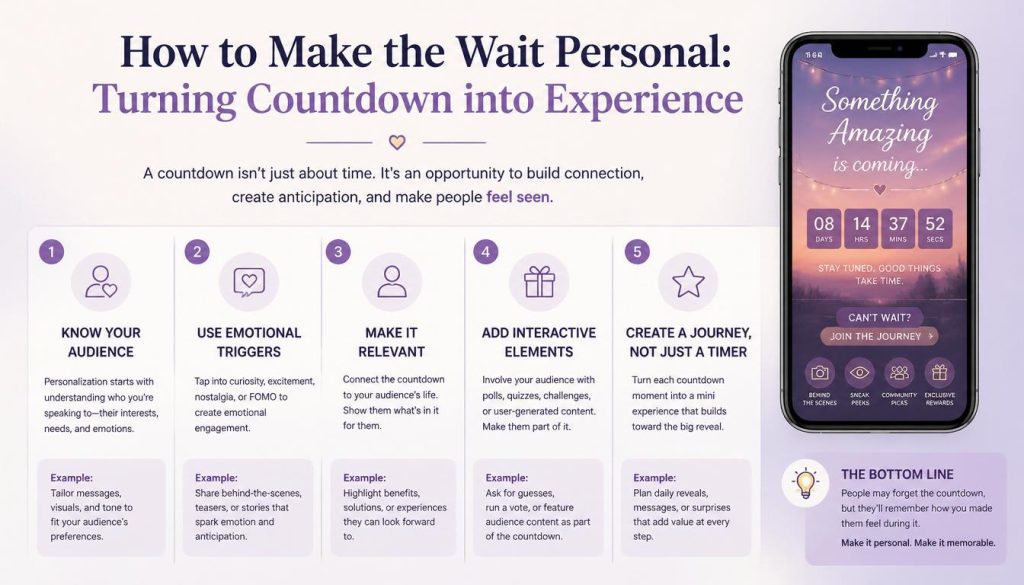
Waiting doesn’t have to feel empty. It can be shaped, slightly softened, even personalized.
Here are ways people make the experience of how long until 2:30 PM more meaningful:
- Add a personal label like “meeting with Maria energy boost moment”
- Use customizable themes in your event countdown apps
- Enable gentle notification reminders instead of harsh alerts
- Treat each time checkpoint like a small achievement
- Write notes in feedback boxes like you’re talking to time itself
- Use scheduled events to anchor your day mentally
- Switch between productivity timer and rest mode intentionally
- Observe your own impatience without judging it too harshly
- Practice brief mindful pauses during time progression awareness
- Imagine the moment after 2:30 PM (primary target time) as already complete
And weirdly, that helps.
Not always perfectly, but enough.
Frequently Asked Questions
how long until 2 30
The time until 2:30 depends on your current local time. You can calculate it by subtracting the current time from 2:30 PM.
how long until 230 pm today
The remaining time until 2:30 PM today depends on the current time. It is the difference between now and 2:30 PM.
how long till 2 30
The time left until 2:30 is based on your current time. It is usually shown in hours and minutes remaining.
how many more minutes until 2 30 pm today
The minutes remaining until 2:30 PM depend on the current time. Subtract the current time from 2:30 PM to get the result.
how long until 2 30 pm
The time remaining until 2:30 PM depends on the current clock time. It is calculated as the difference between now and 2:30 PM.
Read this Blog: https://zyroxin.com/how-long-is-8-inches/
Conclusion: When 2:30 PM Finally Arrives, It Was Never Just About the Time
At the end of all this waiting, all these refreshes, all the emotional micro-battles with seconds, 2:30 PM arrives quietly. Not with fireworks. Not with dramatic music. Just… it happens.
And you realize the countdown was never only about duration calculation or seconds until event. It was about attention. About awareness. About how humans stretch meaning across time like soft fabric that refuses to tear.
Whether it’s 2:30 AM (alternative/overnight version) or afternoon light slipping through windows, time keeps doing what it always does—moving, quietly indifferent, yet deeply felt.
And maybe that’s the strange beauty of it.
So next time you find yourself asking how long until 2:30 PM, maybe don’t just look at the clock. Notice how you exist inside the waiting too. The thoughts, the impatience, the tiny hopes, even the silly distractions.
Because in the end, time is not just something you wait for.
It’s something you live through, even when it feels like it’s teasing you a little.